Brain Mapping & qEEG Assessment on Gold Coast
Health, Brain Mapping Gold Coast, qEEG Assessment
Brain Mapping on the Gold Coast: What Is a Brain & Nervous System Assessment?
Discover how a personalised Brain & Nervous System Assessment at Neurotherapy Australia uses qEEG brain mapping and wellbeing information to offer clearer insight into your individual brainwave activity, stress, focus, sleep and everyday functioning on the Gold Coast.
Looking for a Clearer Picture of Stress, Focus or Sleep?
If you often feel stressed, find it hard to focus, struggle to switch off at night or wake up feeling tired, it can be difficult to know why. You may have already tried general tips for sleep, stress or productivity and still feel like something is missing from the picture.
Brain mapping offers a way to move beyond guesswork. Instead of relying only on broad advice, a Brain & Nervous System Assessment can provide information about your own brainwave activity and wellbeing patterns. For people seeking brain mapping on the Gold Coast, Neurotherapy Australia in Ashmore combines qEEG brain mapping with structured wellbeing information to build a more personalised view of how your brain and nervous system may be functioning day to day.
What Is Brain Mapping?
Brain mapping is a way of recording and analysing the tiny electrical signals produced by the brain. These signals, known as brainwaves, change with different states such as being relaxed, focused, drowsy or alert. Rather than looking at the brain only in a general way, brain mapping aims to show patterns that are specific to you.
Introducing qEEG: Quantitative Electroencephalography
One method used in brain mapping is quantitative electroencephalography (qEEG). In simple terms, qEEG is a structured way of recording and analysing brainwaves using sensors placed on the scalp. These sensors pick up the brain’s electrical activity, which is then processed by specialised software to create visual maps and numerical information about your brainwave patterns.
During a qEEG assessment, you wear a cap or sensors that sit gently on your head. These sensors do not put anything into your brain; they simply record the natural electrical activity that is already there. The recording is then analysed to see how different areas of your brain may be communicating and how different types of brainwaves are showing up for you.
Important: qEEG brain mapping is not used to diagnose medical, psychological or neurological conditions. Instead, it may offer additional information that can be considered alongside other clinical or wellbeing insights.
Advances in brainwave research continue to refine how qEEG data can be interpreted, but in everyday practice the focus remains on providing understandable, personalised information rather than complex laboratory measures. At Neurotherapy Australia, the emphasis is on making these findings practical and relevant to your experience, not on turning you into a research subject.
What Can a Brain Map Tell You?
Your brain’s electrical activity changes throughout the day. Certain patterns are more common when you are deeply relaxed, while others are more typical when you are concentrating or feeling stressed. A brain mapping assessment may provide information that helps explore how your own patterns relate to areas such as:
Focus and concentration – for example, whether your brainwave activity may be consistent with a more relaxed, distracted or highly alert state during certain tasks.
Relaxation and arousal – patterns that may offer insight into how easily your brain may shift between “switched on” and “winding down” states.
Sleep-related patterns – activity that may be explored in relation to difficulty falling asleep, staying asleep or waking unrefreshed.
Brainwave activity linked with stress – patterns that may relate to feeling constantly “on alert” or finding it hard to switch off.
Nervous system regulation – how your brainwave patterns may be considered alongside how your body and emotions respond to everyday demands.
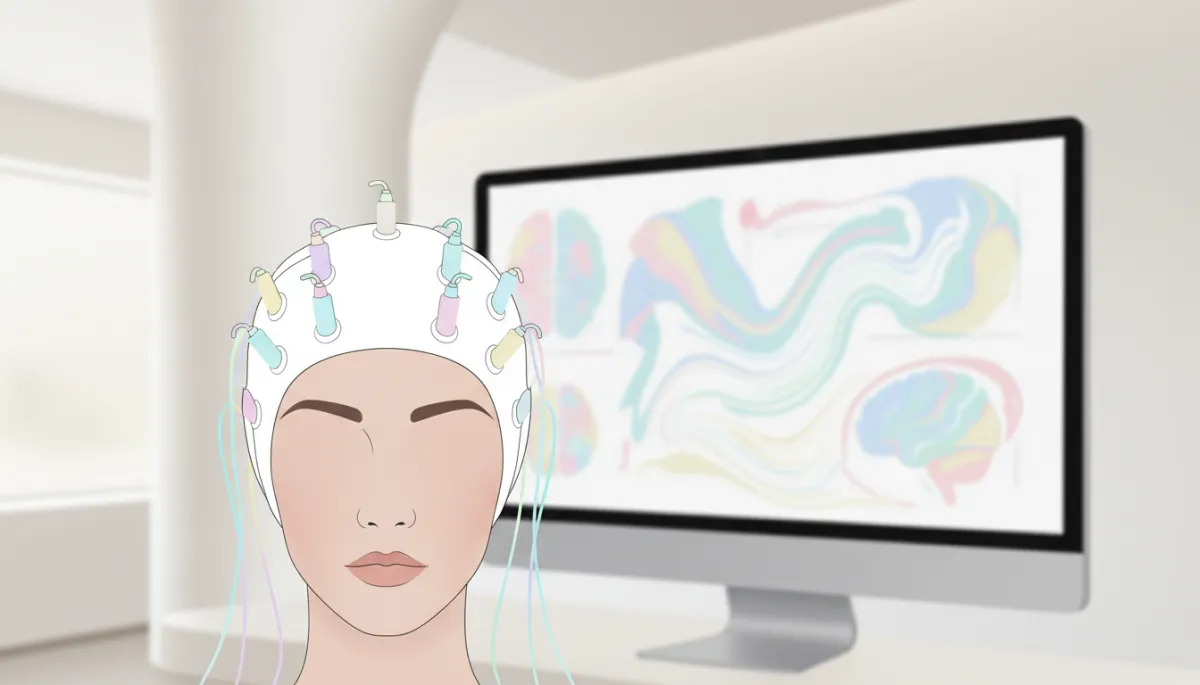
Brain maps may offer insight into individual patterns linked with stress, focus and sleep.
It is important to use careful language here. A qEEG may provide information about these areas, and can help explore possible links between your brainwave activity and how you report feeling. It does not tell the whole story on its own, and it does not “label” you with a condition. Instead, it can contribute one more layer of understanding to a broader picture of your wellbeing.
Note: A qEEG brain map is not a diagnostic test. It is not used to diagnose medical, psychological or neurological conditions and should not replace medical assessment where this is needed.
Why Combine Brain Mapping With a Nervous System Assessment?
Your brain is part of a larger system that includes your body, emotions and environment. While a brain map focuses on brainwave activity, it does not automatically explain your sleep habits, work pressures, physical health or lifestyle. This is why Neurotherapy Australia’s Brain & Nervous System Assessment looks beyond the qEEG data alone.
In this assessment, your qEEG information is considered alongside structured wellbeing questionnaires and relevant background details. This may include how you experience stress, your sleep patterns, energy levels, challenges with focus or brain fog, and other factors that matter to you. When these pieces are viewed together, they can create a more personalised picture than either brain mapping or self-report alone could provide.
💡 The aim is integration, not isolation. Instead of treating your qEEG as a stand‑alone report, the Brain & Nervous System Assessment weaves your brainwave data into the broader context of your everyday life.
This combined approach can be especially helpful if you have tried general wellbeing advice and found it difficult to know what actually applies to you. By grounding the conversation in your own data, the assessment may support clearer, more tailored next steps.
Who Might Consider a Brain & Nervous System Assessment?
The Brain & Nervous System Assessment is designed for adults who want a more personalised understanding of how their brain and nervous system may be functioning. You do not need to have a specific diagnosis to be curious about your patterns. Many people simply want clearer information to guide their decisions about wellbeing or performance.
You might consider a brain mapping assessment on the Gold Coast if you are interested in exploring:
Ongoing stress or feeling constantly “on edge”
Difficulties with focus, concentration or mental clarity
Challenges with sleep, such as trouble winding down, staying asleep or waking unrefreshed
Persistent fatigue or low energy, even when you feel you are “doing the right things”
Fluctuating emotional regulation, such as feeling easily overwhelmed or finding it hard to come back to a calm state
Periods of brain fog, slower thinking or reduced mental stamina
Questions about recovery after stress, illness or demanding periods of work or training
Interest in general wellbeing and how your brain and nervous system patterns may relate to how you feel each day
Curiosity about performance and personal development, such as mental clarity, resilience or focus under pressure
Some people come to the assessment because they feel stuck and want a new way of looking at their experience. Others are already functioning well but want to understand their brain and nervous system more deeply as part of a proactive approach to wellbeing or performance. Both perspectives are valid. The assessment is designed to meet you where you are, without assuming that something is “wrong” with you for being curious.
What Happens During a Brain & Nervous System Assessment?
At Neurotherapy Australia on the Gold Coast, the Brain & Nervous System Assessment is a two‑session process. This structure is designed to give enough time for careful data collection and a thoughtful, personalised review of your results.
Session One: qEEG Brain Mapping & Information Gathering
The first session focuses on understanding your current experience and collecting the information needed for your assessment. This typically includes:
qEEG brain mapping – Sensors or a cap are placed on your scalp to record your brain’s electrical activity while you are resting quietly, and sometimes while you complete simple tasks. The process is non‑invasive and is designed to be as comfortable as possible.
Wellbeing questionnaires – You complete structured questionnaires about areas such as stress, sleep, focus, mood, energy and daily functioning. These help capture your perspective in a clear, organised way.
Relevant background information – You may be invited to share key details about your history, lifestyle, work or study demands, and any specific concerns or goals you have for the assessment.
After this session, your qEEG recording and questionnaire responses are reviewed in detail. The goal is to prepare a clear, personalised summary that can be discussed with you at your second appointment.
Session Two: Results, Questions & Practical Next Steps
The second session is dedicated to making sense of your results in a way that feels understandable and useful. During this appointment, you can expect to:
Review your findings – Your qEEG brain map and questionnaire results are explained in clear language, with space to move at a pace that suits you.
Understand possible patterns – You explore how your individual brainwave activity and nervous system patterns may relate to the areas you are curious about, such as stress, focus, sleep, fatigue or emotional regulation.
Ask questions – You are encouraged to ask questions and clarify anything that is unclear. The aim is for you to leave with a grounded understanding, not a list of unexplained terms.
Discuss appropriate options – You talk through possible next steps that may be suitable for you. These could include self‑care strategies, further assessment, or other supports, depending on your goals and preferences.
Receive practical tools and resources – You are provided with practical tools, techniques and resources that may help you apply what you have learned in everyday life.
The assessment is not about labelling or promising specific outcomes. It is about understanding your patterns more clearly so that any future choices you make can be more informed.
Why Personalised Information Matters
The internet is full of general advice about stress, sleep, focus and wellbeing. While some of this information can be helpful, it is not always clear how much of it applies to you as an individual. Two people can read the same article, follow the same steps and still have very different experiences and results.
A personalised brain assessment on the Gold Coast may offer something different. By combining your own brainwave data with your own wellbeing information, the Brain & Nervous System Assessment can help shift the conversation from “what usually works for people” to “what might be most relevant for you.”
It may support a deeper sense of understanding – seeing your patterns laid out can make your experience feel more tangible and less vague.
It can provide clarity – helping you see which areas may be most important to focus on first, rather than trying to change everything at once.
It may support more informed next steps – allowing you to consider options in light of your own data and preferences, rather than generic recommendations alone.
Personalised information does not replace medical care or psychological support where these are needed. Instead, it can sit alongside them as another source of insight, helping you feel more involved and better informed in decisions about your wellbeing.
Brain Mapping on the Gold Coast with Neurotherapy Australia
For adults seeking brain mapping Gold Coast services, Neurotherapy Australia offers the Brain & Nervous System Assessment from its clinic at 38/207 Currumburra Rd, Ashmore QLD 4214, Australia. The clinic is centrally located on the Gold Coast, making it accessible for people across the region who wish to explore their individual brainwave and nervous system patterns in more detail.
Assessment Type | Total Fee (AUD) | Holding Deposit | Remaining Balance |
|---|---|---|---|
Brain & Nervous System Assessment (Initial qEEG Brain Mapping) | $330.00 | $50.00 (non‑refundable holding fee) | $280.00 (payable on assessment day) |
The assessment fee of $330 AUD covers both sessions: your initial qEEG brain mapping and information‑gathering appointment, and your follow‑up session where your results are reviewed and discussed. A non‑refundable $50 holding fee is required to secure your booking, with the remaining balance of $280 payable on the day of your assessment. Further details are available on Neurotherapy Australia’s qEEG assessment pricing page.
The Brain & Nervous System Assessment is not a quick online quiz or a one‑size‑fits‑all report. It is a structured, two‑session process that focuses on your individual data, your questions and your goals. Whether you are primarily interested in stress, sleep, focus, fatigue, emotional regulation, recovery or performance, the aim is to support a clearer understanding of your patterns, not to push you toward any particular treatment path.
Start With Understanding
Your brain and nervous system play a central role in how you experience everyday life – from how you handle stress at work, to how easily you fall asleep, to how clearly you can think when it matters most. When you are unsure why you feel the way you do, it can be hard to know what to change or where to focus your efforts.
Starting with understanding can make a difference. A Brain & Nervous System Assessment may help you move from broad, general advice to a more personalised view of your own patterns. It does not promise specific outcomes or quick fixes. Instead, it offers information, clarity and a structured way to consider your next steps.
Ready to Understand Your Brain?
If you live on the Gold Coast or nearby and are curious about what a brain mapping assessment Gold Coast experience could reveal about your individual brainwave activity, you may wish to explore Neurotherapy Australia’s Brain & Nervous System Assessment. You can learn more about what is involved and check current availability on the initial assessment page.
Taking this step does not mean there is something “wrong” with you. It simply means you are interested in understanding your brain and nervous system in a more detailed, personalised way – so that any future choices you make about your wellbeing, performance or personal development can be grounded in your own information, not just general advice.