Regain Brain Balance: Overcome Survival Mode
Brain Health, Nervous System Regulation, Neurotherapy Australia
Why Your Brain Stays Stuck in Survival Mode and How to Regain Balance
Understand survival mode, nervous system regulation, and practical daily habits to support brain health, resilience, and mental wellbeing.
URL Slug: why-your-brain-stays-stuck-in-survival-mode
Engaging Introduction
Have you ever noticed that your body feels “on edge” even when you know, logically, that you are safe? The work deadline has passed, the argument is over, you are finally at home on the couch – yet your heart is still racing, your thoughts will not slow down, and you cannot seem to relax. It can feel as if your brain did not get the memo that the stressful moment is finished.
This ongoing sense of internal alarm is often called survival mode. In survival mode, your brain and nervous system behave as though a threat is still present, even when you are physically safe. Over time, this can affect brain health, mental wellbeing, sleep, focus, and relationships, and it can make everyday life feel harder than it needs to be.
As a senior software developer might say, it is like your nervous system has a useful emergency script that keeps running in the background, long after the bug has been fixed. The system is not broken – it is just stuck in the wrong mode. The good news is that, just as we can refactor code, we can also support the nervous system to regain balance through nervous system regulation, education, and evidence-informed therapies such as neurotherapy and HRV training.
What Is Survival Mode?
Survival mode is the brain’s automatic way of keeping you alive. When the brain detects danger, it activates the sympathetic nervous system, often called the fight or flight response. This system is part of your stress response and is designed to help you react quickly to threats, such as a speeding car or a sudden loud noise.
In survival mode, your body prepares to either confront the danger or escape it. This happens automatically and very quickly, without needing conscious thought. From an evolutionary point of view, this is a powerful safety feature. Without it, our ancestors would not have survived long enough for us to be here today.
How the Sympathetic Nervous System Prepares the Body
Increasing alertness: Your brain becomes hyper-focused on potential danger. You may feel “wired” or jumpy, scanning for problems the way a monitoring system scans for errors in a codebase.
Raising heart rate: Your heart pumps faster to deliver more oxygen and nutrients to your muscles, preparing you to move quickly if needed.
Speeding up breathing: Your breathing becomes faster and shallower to bring more oxygen into the body in a short time.
Tightening muscles: Muscles tense so you are ready to run, fight, or protect yourself. Over time, this can feel like constant tight shoulders, jaw clenching, or a knot in your stomach.
Directing attention towards danger: The brain narrows focus onto anything that might be a threat. Everyday tasks can feel harder because your attention is pulled towards “what if” scenarios and possible risks.
This response is essential when you are in genuine danger. However, our modern world is full of ongoing, less visible stressors such as work pressure, financial concerns, relationship challenges, ongoing anxiety, poor sleep, and emotional overwhelm. These do not look like a tiger on the path, but your brain can still treat them as threats, keeping your sympathetic nervous system turned on for far longer than it was designed for.
💡 Helpful perspective: Survival mode is not your fault or a sign of weakness. It is your brain trying very hard to protect you, even if the timing is no longer helpful.
Why Your Brain Stays Stuck in Survival Mode
One of the most important ideas in neuroscience is that the brain responds to what it perceives, not always to what is actually happening. If your brain believes you are under threat, it will activate the stress response, even if, from the outside, everything looks fine. This is similar to a software alert system that fires whenever it thinks there is a bug, even if the code is running correctly.
Chronic Stress and an Overprotective Nervous System
When you face chronic stress – stress that is frequent or long-lasting – your nervous system can become overprotective. It learns that the world is often unsafe or demanding, and it starts to trigger survival mode more easily and more often. Over time, the “threshold” for danger can lower, so smaller triggers set off a big response.
In code terms, it is like having an overly sensitive error handler that treats every minor warning as a critical system failure. The handler is trying to help, but it ends up creating noise and slowing down the system. In your body, this can look like feeling constantly on edge, even during quiet moments, or finding it hard to switch off at night, even when you are exhausted.
Your Body’s “Recovery Mode”: The Parasympathetic Nervous System
The opposite of the sympathetic fight or flight system is the parasympathetic nervous system, often called “rest and digest.” This system supports recovery, digestion, sleep, repair, and emotional settling. A healthy nervous system can move flexibly between activation (when needed) and recovery (when the danger has passed).
When the sympathetic system is switched on too often, and the parasympathetic system does not get enough time to do its job, you may start to feel worn down, foggy, or emotionally fragile. Learning nervous system regulation skills is about improving this flexibility – helping the brain and body to move in and out of survival mode in a more balanced way.
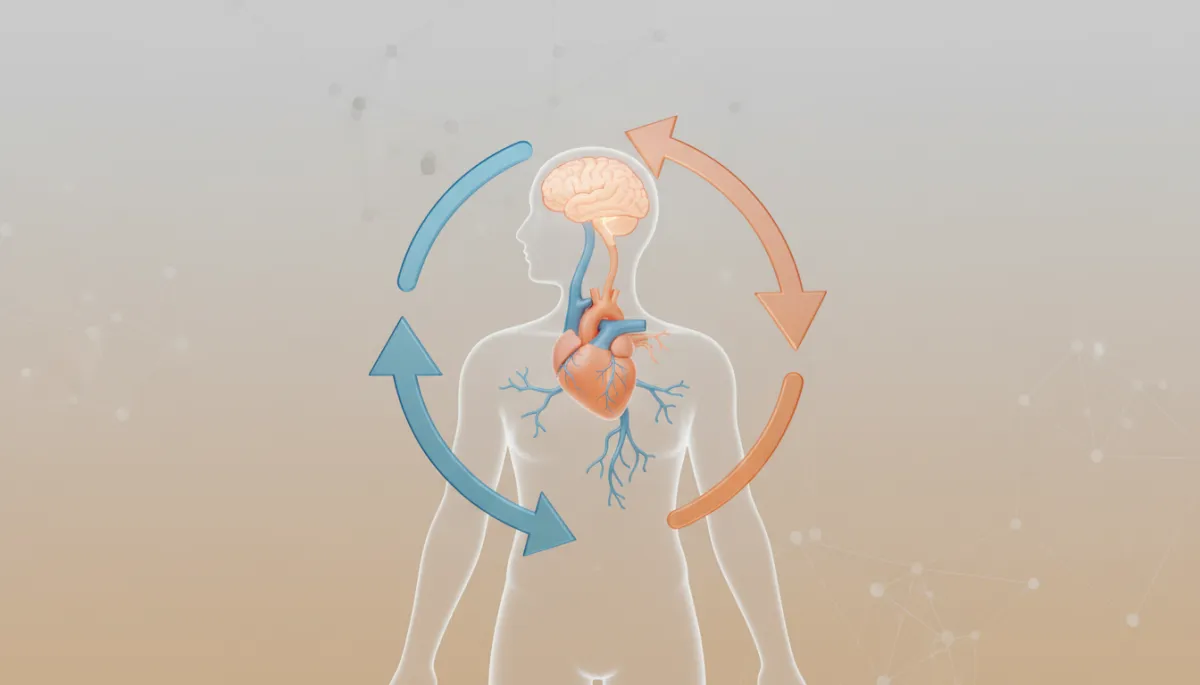
Healthy nervous system regulation is about flexible shifting between activation and recovery.
Signs Your Nervous System May Be Overloaded
Because the stress response involves the whole body, an overloaded nervous system can show up in many different ways. Common signs include:
Difficulty relaxing: Feeling unable to switch off, even when you have time and space to rest.
Racing thoughts: A busy mind that jumps from one worry to another, like a program stuck in a tight loop.
Poor concentration and brain fog: Struggling to focus, remember details, or make decisions, even on simple tasks.
Emotional reactivity and irritability: Feeling “snappy,” tearful, or overwhelmed by emotions that seem bigger than the situation.
Poor sleep: Trouble falling asleep, staying asleep, or waking feeling unrefreshed, even after a full night in bed.
Mental fatigue: Feeling mentally drained, as if your “processing power” has been used up for the day by lunchtime.
Feeling constantly overwhelmed: Everyday tasks feel heavy, and small changes or demands can tip you over the edge.
⚠️ Important: These signs can have many causes. If you are concerned about your health, it is important to speak with a qualified health professional for personalised advice.
Why Nervous System Regulation Matters
The goal of nervous system regulation is not to eliminate stress completely. Some level of stress is normal and even helpful. Instead, the aim is to improve the brain’s ability to move between activation and recovery in a flexible, healthy way. This flexibility underpins emotional regulation, resilience, and long-term mental wellbeing.
The Brain–Body Connection and Overall Wellbeing
Your brain and nervous system are constantly exchanging information with your body. When your stress response is frequently activated, this can influence hormones, immune function, digestion, sleep, and mood. Over time, this may contribute to feeling run down, more sensitive to stress, or less able to bounce back from challenges.
Supporting nervous system regulation can help you:
respond rather than react in stressful moments,
recover more quickly after a challenging day, and
build resilience so that future stressors feel more manageable.
In programming terms, you are improving both your system’s performance and its error recovery process, so that short spikes in demand do not crash the whole application.
Daily Habits That Help Restore Balance
While no single habit is a magic fix, small, consistent practices can send steady “safety signals” to your brain and support more balanced nervous system regulation. Think of these as gentle patches that improve the way your internal stress system runs over time.
Slow, Controlled Breathing and Heart Focused Breathing
Slow, steady breathing is one of the simplest ways to nudge the parasympathetic nervous system. A common approach is to breathe in through the nose for about four seconds, and out through the mouth for about six seconds, keeping the breath smooth and gentle. This can help shift the body out of fight or flight and into a calmer state.
Heart focused breathing adds a layer of attention by gently focusing on the area around your heart as you breathe, and bringing to mind a sense of appreciation or calm. This practice can support heart–brain communication and is often used alongside HRV training (heart rate variability training) to improve regulation over time.
Mindfulness and Present-Moment Awareness
Mindfulness involves gently bringing your attention back to the present moment, rather than getting pulled into worries about the future or regrets about the past. This might look like noticing the feeling of your feet on the floor, the temperature of the air, or the sound of birds outside, even for a minute or two. These small check-ins can help your brain recognise that, right now, you are safe.
Regular Movement and Exercise
Regular movement helps your body process stress hormones and can support better sleep, mood, and focus. This does not need to be intense. A daily walk, gentle stretching, or light strength work can all support nervous system regulation. The key is consistency rather than perfection.
Healthy Sleep Habits and Time in Nature
Sleep is one of the most powerful regulators of brain health. A regular sleep routine, a dark and quiet bedroom, and reducing screens before bed can all help signal to your nervous system that it is time to power down. Spending time in nature – even a short walk in a local park – can also reduce stress levels and support a sense of calm.
Nutritious Eating, Limiting Stress, and Taking Breaks
A balanced, nutritious diet provides the brain with the fuel it needs to function well. While there is no single “perfect” diet, regular meals, adequate hydration, and a variety of whole foods can support stable energy and mood. Where possible, it can also help to limit unnecessary stressors – for example, by setting realistic boundaries around work hours or reducing non-essential commitments when you are already stretched.
Short breaks throughout the day act like small resets for the nervous system. Even a two-minute pause away from your screen to stretch, breathe, or look out a window can help. In development terms, you are avoiding long, blocking tasks and choosing smaller, more manageable chunks of processing.
📌 Key idea: Small, consistent habits practised daily are often more effective than occasional big efforts. Gentle repetition helps your nervous system learn new patterns of safety over time.
How Neurotherapy Australia Can Help
Education is a powerful part of improving brain health. Understanding how your nervous system works, why it responds the way it does, and what supports it can turn a confusing experience into something more predictable and manageable. This is a core focus at Neurotherapy Australia.
Evidence-Informed Assessment and Personalised Programs
Neurotherapy Australia provides evidence-informed assessments to help you better understand how your brain and nervous system are functioning. This may include exploring patterns related to attention, arousal, and stress response. From there, personalised wellbeing programs can be developed to support your unique goals and circumstances. These programs are designed to complement, not replace, medical care from your existing health providers.
Neurotherapy, Neurofeedback, and HRV Training
Neurotherapy and neurofeedback use real-time information about brain activity to support self-regulation. For some people, this may help the brain learn more flexible patterns over time. HRV training focuses on heart rate variability – the natural variation in time between heartbeats – which is closely linked to nervous system regulation and the balance between the sympathetic and parasympathetic systems.
Neurotherapy Australia also offers nervous system education and practical strategies to integrate into daily life, supporting emotional regulation, resilience, and overall mental wellbeing. While individual results can vary and no approach can guarantee specific outcomes, many people find that understanding and working with their nervous system gives them a greater sense of control and clarity.
💡 Note: Neurotherapy and related approaches are not quick fixes. They are tools that can support a broader, long-term approach to brain health and wellbeing.
Frequently Asked Questions
1. Is survival mode the same as anxiety?
Survival mode and anxiety are related but not identical. Survival mode refers to the body’s overall stress response, including activation of the sympathetic nervous system. Anxiety is a feeling state – worry, fear, or unease – that can arise when the stress response is active. You can be in survival mode without noticing strong anxiety, and you can feel anxious even when your body is relatively calm. Both involve how your brain perceives and responds to potential threats.
2. How long does it take to calm an overloaded nervous system?
There is no single timeframe that fits everyone. Some people notice small shifts within days or weeks of practising supportive habits such as slow breathing, movement, and better sleep routines. For others, especially when chronic stress has been present for a long time, change can be more gradual. Working with qualified professionals, such as those at Neurotherapy Australia, can help you create a realistic, step-by-step plan that suits your situation.
3. Can nervous system regulation replace medication or therapy?
Practices that support nervous system regulation are usually best seen as complementary strategies, not replacements for medical care, psychological therapy, or prescribed medication. Any changes to treatment should always be discussed with your doctor or mental health professional. Neurotherapy Australia works within an evidence-informed framework and encourages clients to maintain contact with their broader healthcare team.
4. Is neurotherapy or neurofeedback painful or invasive?
Neurotherapy and neurofeedback are generally non-invasive. Sensors are typically placed on the scalp to measure brain activity, similar to how heart sensors measure heart rhythms. The information is then used to guide training. People usually remain awake and engaged throughout sessions. Your clinician can explain what to expect and answer any questions before you begin.
5. What is HRV training and how does it help?
HRV training focuses on heart rate variability, the natural variation in time between heartbeats. Higher, flexible HRV is often associated with better nervous system regulation and resilience. Through guided breathing and feedback, HRV training helps you learn how to influence this pattern, supporting the balance between fight or flight and rest and digest responses over time.
6. Do I have to be “good at meditation” for these approaches to work?
No. Many people find traditional meditation difficult, especially when their nervous system is already overloaded. Nervous system regulation can begin with very simple, practical steps, such as a few slow breaths, a short walk, or learning about your own stress patterns. Over time, you may find it easier to explore other practices, but there is no requirement to meditate perfectly for change to occur.
7. How do I know if Neurotherapy Australia is right for me?
If you are curious about how your brain and nervous system are functioning, feel stuck in survival mode, or want support with nervous system regulation and brain health, it may be helpful to speak with Neurotherapy Australia. An initial consultation can explore your history, current challenges, and goals, and help you decide whether their services are a good fit alongside your existing care.
Key Takeaways
Survival mode is a normal, protective activation of the sympathetic nervous system, but modern life can keep it switched on for too long.
The brain responds to what it perceives as dangerous, which means chronic stress can lead to an overprotective nervous system.
Signs of overload include difficulty relaxing, racing thoughts, brain fog, irritability, poor sleep, and feeling constantly overwhelmed.
Nervous system regulation is about improving flexibility between fight or flight and the parasympathetic rest and digest state, not removing stress completely.
Small, daily habits – slow breathing, heart focused breathing, mindfulness, movement, sleep, nature, nutrition, and breaks – can support emotional regulation and resilience.
Neurotherapy Australia offers evidence-informed assessment, neurotherapy, neurofeedback, HRV training, and education to help you better understand and support your brain and nervous system.
Conclusion
Living in survival mode can be exhausting, confusing, and lonely. It can also be reassuring to know that this state is not a personal failure. It is your brain and body doing their best to protect you, based on the information and patterns they have learned over time. By understanding how the stress response works, and by gently supporting your nervous system with daily habits and, where appropriate, professional guidance, it is possible to move towards greater balance, clarity, and ease.
Whether you relate to difficulty relaxing, racing thoughts, poor sleep, or feeling constantly overwhelmed, you do not have to navigate this alone. There are practical, evidence-informed tools that can help you work with your nervous system rather than against it, and there are services designed to help you understand your own brain in more detail.
If you would like to learn more about nervous system regulation, neurotherapy, or how your own brain is functioning, consider exploring the resources and services offered by Neurotherapy Australia. An initial consultation can help you better understand your current patterns and discuss options that may support your brain health, emotional regulation, and mental wellbeing.
You might choose to start with a simple daily habit, such as a few minutes of heart-focused breathing, or you may be ready to book a personalised assessment. Whatever your next step, it is a valid and important part of moving from survival mode towards a more balanced, resilient way of living.