Heart-Brain Coherence for a Calmer Nervous System
Neurotherapy, Brain Health, Heart-Brain Coherence, Breathwork
How Heart-Brain Coherence Supports a Calmer Nervous System
SEO Title: Heart-Brain Coherence and Breathwork: A Calmer Nervous System with Neurotherapy Australia
Meta Description: Discover how heart-brain coherence, HRV, and simple breathwork practices can support nervous system regulation, emotional balance, and brain health with Neurotherapy Australia.
URL Slug: heart-brain-coherence-breathing-neurotherapy-australia
Breathing is more than moving air in and out of your lungs. Each breath sends signals between your heart, brain, and nervous system. By learning how to work with this connection, you can gently support heart-brain coherence, emotional regulation, and overall brain health in everyday life.

Introduction: Your Breath as a Bridge Between Heart and Brain
When life becomes busy, stressful, or emotionally demanding, one of the first things to change is your breathing. It often becomes faster, shallower, and more irregular without you even noticing. This shift is not just a feeling in your chest; it changes how your heart, brain, and nervous system communicate with each other.
As a senior software developer might debug a complex system by looking at how different components send and receive signals, we can view the body in a similar way. Your breath is like a simple, user-friendly interface into a very sophisticated “backend” made up of your heart, brain, and autonomic nervous system. Small, consistent changes at this interface can have meaningful downstream effects on nervous system regulation over time.
In this article, we will explore what heart-brain coherence is, how stress alters your breathing, and how slow, rhythmic breathwork can support heart rate variability (HRV), vagal activity, and emotional regulation. We will also introduce how Neurotherapy Australia works with neurotherapy, HRV training, neurofeedback, and education to support brain health in an evidence-informed way.
What Is Heart-Brain Coherence?
Heart-brain coherence describes a balanced physiological state where the heart, brain, and nervous system communicate in an organised, efficient way. In this state, signals flowing between these systems are more stable and predictable, rather than chaotic and irregular. Many people describe this as feeling calm, clear, and emotionally steady, even when life is still busy around them.
From a physiological point of view, heart coherence is often linked with a smooth, sine-wave-like pattern in heart rate variability. Instead of your heart rate jumping erratically from beat to beat, it gently rises and falls in time with your breathing. This pattern suggests that your autonomic nervous system – the part that controls heart rate, digestion, and many other automatic functions – is working in a coordinated way.
📌 Key Idea: Heart-brain coherence is not a constant “perfect state”. It is a pattern your body can move towards more often through supportive habits like slow, rhythmic breathing.
How Stress Changes Your Breathing
When your brain detects a potential threat – a tight deadline, an argument, or even a worrying thought – it activates the body’s survival response. This is often called the “fight, flight, or freeze” response. Your breathing is one of the first systems to respond.
Your breath becomes quicker and more shallow.
Your heart rate increases to pump blood to your muscles.
Muscles tighten, ready for action.
Your attention narrows towards possible danger.
This response is useful in genuine emergencies. However, ongoing psychological stress – such as chronic workload, relationship strain, or health concerns – can keep this pattern running long after the event has passed. The “code” of your breathing pattern gets stuck in a high-alert loop, even when you would prefer to be in a calmer state.
💡 Gentle Reminder: If you notice yourself sighing often, holding your breath, or breathing into your upper chest, these can be signs that stress is shaping your breathing without your awareness.
The Connection Between Your Heart, Brain, and Nervous System
Your heart and brain are in constant conversation. This two-way communication happens largely through the autonomic nervous system and the vagus nerve, a major nerve that runs from the brainstem down through the chest and abdomen. You can think of the vagus nerve as a high-speed data cable carrying ongoing status updates between your body and brain.
Heart Rate Variability (HRV): Your System’s “Adaptability Metric”
Heart rate variability (HRV) refers to the natural variation in time between each heartbeat. Rather than beating like a metronome, a healthy heart speeds up as you breathe in and slows down as you breathe out. This flexibility is a sign that your nervous system can shift between “on” and “off” states as needed.
Higher, well-organised HRV is generally linked with better emotional regulation, resilience, and stress management. Lower or more rigid HRV patterns can be associated with ongoing stress load or reduced adaptability. It is important to remember that HRV is influenced by many factors, including age, fitness, sleep, and health conditions, so it is best understood in context rather than as a single score.
Vagal Activity and Autonomic Nervous System Regulation
The autonomic nervous system has two main branches:
The sympathetic system, which prepares you for action (fight or flight).
The parasympathetic system, strongly linked with the vagus nerve, which supports rest, recovery, and social connection.
When vagal activity is strong and responsive, your body can shift more smoothly from stress to recovery. In software terms, it is like having a reliable “graceful shutdown” routine rather than a sudden system crash. Slow, rhythmic breathing appears to support vagal activity, which in turn can encourage more coherent HRV patterns and a calmer internal state.
Heart-Brain Communication in Everyday Life
Signals from the heart influence areas of the brain involved in emotional regulation, attention, and decision-making. When your heart rhythm is irregular and erratic, the signals sent to the brain can contribute to feelings of anxiety, irritability, or mental fog. When your heart rhythm becomes smoother and more coherent, the brain often receives clearer, more stable input, which may support calmer thinking and more balanced emotional responses.
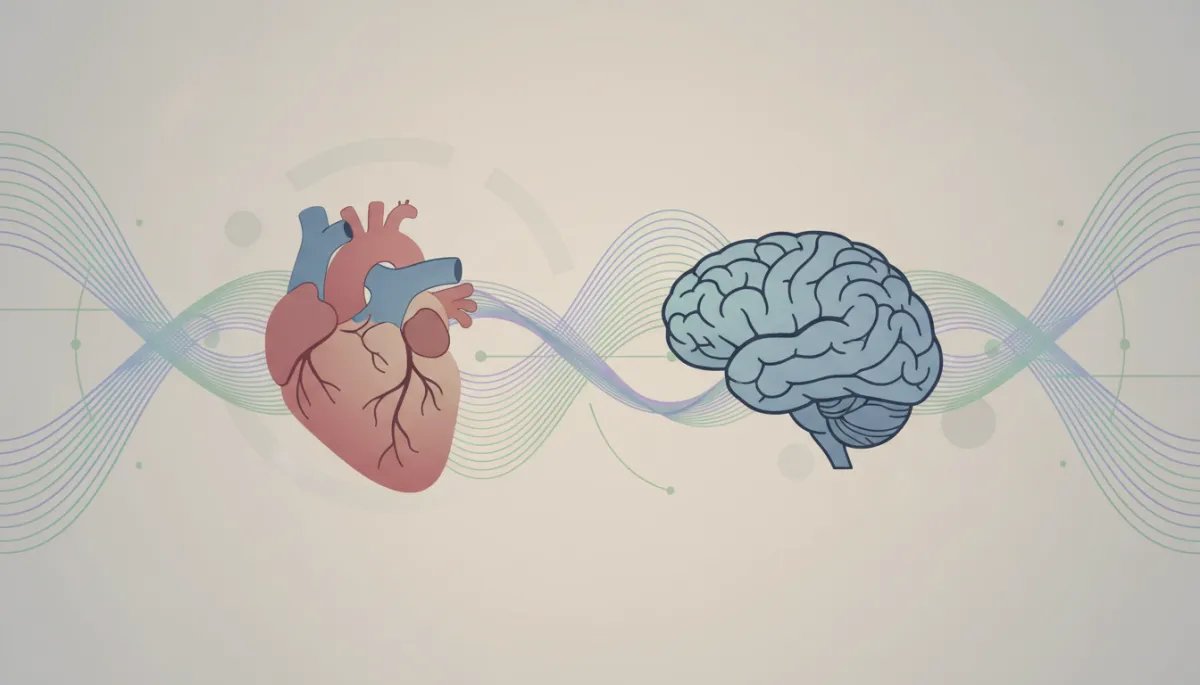
Coherent heart rhythms send clearer signals to brain regions involved in focus and emotional regulation.
Why Slow Rhythmic Breathing Matters
Slow, rhythmic breathing is one of the simplest ways to influence heart-brain coherence and support nervous system regulation. When you breathe in for a steady count and breathe out for a similar length, your heart rate begins to follow that rhythm. This process can encourage a more coherent HRV pattern and support vagal activity.
📌 Important: The goal is not to force relaxation or “get it right”. Instead, you are offering your nervous system consistent, gentle signals of safety.
Research suggests that breathing at around five to six breaths per minute (for many people, that is roughly a five-second inhale and five-second exhale) can be particularly effective for supporting HRV and heart coherence. However, the exact timing that feels comfortable will vary from person to person. Your own sense of ease is more important than any specific number.
Step-by-Step Breathing Practice for Heart-Brain Coherence
You do not need any special equipment to begin supporting heart coherence. This simple practice can be used at home, at work, or during a short break in your day.
Sit comfortably. Find a position where your feet are supported and your spine is reasonably upright, without strain.
Relax your shoulders and jaw. Allow your shoulders to soften and your jaw to unclench, as if you are gently exhaling tension.
Place your attention on the centre of your chest. You may like to rest a hand there to help anchor your focus.
Breathe in gently for five seconds. Allow the breath to move in through the nose if comfortable, feeling your chest and ribcage expand.
Breathe out slowly for five seconds. Let the exhale be smooth and unforced, as if you are slowly releasing air through a straw or softly parted lips.
Continue for two to five minutes. Keep your attention on the centre of your chest and the gentle rising and falling of your breath.
As you practise, notice how your breathing and body begin to settle naturally. If your mind wanders, that is completely normal. Simply bring your attention back to the feeling in your chest and the steady rhythm of your breath, much like returning to a familiar line of code after a brief distraction.
💡 Gentle Focus: The aim is not to “switch off” thoughts, but to give your nervous system a repeated, reliable signal that you are safe in this moment.
Benefits of Daily Breathwork for Emotional Regulation and Brain Health
Regular breathwork is like committing healthy, supportive code to your nervous system’s “repository” each day. Over time, these small inputs may help shape how your system responds under load. While responses vary between individuals and no practice can guarantee specific outcomes, research and clinical experience suggest several potential benefits when breathwork is used consistently as part of a broader self-care approach.
Emotional Regulation and Resilience
By supporting HRV and heart coherence, slow breathing may help your brain access circuits involved in emotional regulation more easily. This can make it feel slightly easier to pause before reacting, to notice your feelings, and to choose how to respond. Over time, this may contribute to a greater sense of resilience – the capacity to move through stress and return to balance more readily.
Cognitive Performance and Focus
When your nervous system is constantly in high-alert mode, your brain may struggle with focus, working memory, and clear decision-making. Supporting a calmer, more coherent heart rhythm can help free up cognitive resources. Many people report that after a few minutes of coherent breathing, they feel more mentally organised and better able to concentrate on complex tasks, whether that is debugging code, studying, or engaging in meaningful conversations.
Stress Management and Everyday Wellbeing
Breathwork does not remove stressful events from your life. However, it can change the way your body and brain experience them. By practising when you are relatively calm, you are effectively rehearsing a more regulated response that you can draw upon later. Over time, this may support:
A greater sense of internal steadiness during challenging moments.
Increased awareness of early stress signals in your body.
More choice in how you respond, rather than feeling driven purely by automatic reactions.
📌 Balanced Perspective: Breathwork is a supportive tool, not a cure-all. It often works best alongside other approaches such as good sleep, movement, nutrition, and professional support where needed.
Frequently Asked Questions About Heart-Brain Coherence and Breathwork
How often should I practise this breathing exercise?
Many people find benefit from practising for two to five minutes, one to three times per day. Short, frequent sessions are often easier to maintain than long sessions. You might pair the practice with existing routines, such as before starting work, during a lunch break, or before bed.
What if five seconds feels too long?
Comfort is more important than the exact count. If five seconds feels strained, you can try three or four seconds on the inhale and exhale instead. The key elements are a smooth, gentle breath and an even rhythm between in-breath and out-breath. You can gradually lengthen the count if and when it feels natural.
Can breathwork replace medical or psychological treatment?
Breathwork is not a replacement for medical, psychological, or psychiatric care. It is a self-regulation tool that may complement other supports. If you have a medical or mental health condition, it is important to work with your healthcare providers to find an approach that is safe and appropriate for you.
Is heart-brain coherence the same as being relaxed?
Not exactly. Heart-brain coherence is more about being balanced and organised than simply “relaxed”. You can be alert and focused while still being coherent. Many people describe it as feeling calm and ready, rather than sleepy or switched off.
Can technology help me track HRV and coherence?
Some people find it helpful to use HRV tracking devices or apps as part of their breathwork practice. These tools can provide feedback on how your heart rhythm responds to breathing. However, they are not essential. Your own felt sense of calm, clarity, and ease is also an important form of feedback. At Neurotherapy Australia, HRV training may include professional-grade tools and guidance to help interpret data in a meaningful, evidence-informed way.
How Neurotherapy Australia Supports Brain Health and Nervous System Regulation
Neurotherapy Australia focuses on helping individuals understand and support their unique brain function through an evidence-informed approach. Rather than offering quick fixes, the team works collaboratively with clients to build practical skills and insights that can be integrated into daily life.
Neurotherapy: Tailored interventions aimed at supporting brain function and nervous system regulation, guided by assessment and current research where available.
HRV Training: Helping clients learn how their heart rate variability responds to breathing, stress, and recovery, and how to use this information to support heart coherence and resilience.
Neurofeedback: Using real-time feedback about brain activity to help clients practise new patterns of regulation under professional guidance.
Nervous System Education: Providing clear, accessible explanations of how the brain, heart, and body interact, so clients can make informed choices and feel more empowered in their own care.
This integrated approach recognises that brain health, emotional regulation, and stress management are deeply connected. Practices like breathwork are often woven into a broader plan that may also include lifestyle strategies, therapeutic support, and collaborative goal-setting. The focus is on supporting each person’s capacity for self-regulation and resilience, rather than promising specific outcomes.
Bringing Heart-Brain Coherence Into Daily Life
Your breathing is a powerful, accessible way to influence communication between your heart, brain, and nervous system.
Heart-brain coherence is linked with more organised HRV patterns, vagal activity, and balanced autonomic nervous system regulation.
Slow, rhythmic breathing – such as a gentle five-second inhale and five-second exhale – can help provide your nervous system with repeated signals of safety.
Regular breathwork may support emotional regulation, resilience, cognitive performance, and stress management when used alongside other healthy habits and supports.
Neurotherapy Australia offers evidence-informed neurotherapy, HRV training, neurofeedback, and nervous system education to help you understand and support your brain health.
Small Moments of Coherence, One Breath at a Time
Your breathing is always with you. Even when life feels complex or overwhelming, a few slow, intentional breaths can help you reconnect with your body and gently guide your nervous system towards greater balance. You may not be able to control every stressor you face, but you can influence how your system responds, one breath at a time.
Heart-brain coherence is not about perfection. It is about building a relationship with your own physiology, learning how your heart, brain, and nervous system respond, and offering them steady, compassionate support. Over time, these small moments of regulation can add up, supporting your emotional wellbeing, cognitive performance, and overall sense of safety in the world.
If you are curious about how heart-brain coherence, HRV, and breathwork could support your nervous system regulation and brain health, you do not have to explore it alone. Neurotherapy Australia offers evidence-informed neurotherapy, HRV training, neurofeedback, and nervous system education to help you better understand your unique patterns and options for support.
To learn more about our approach or to discuss whether our services may be suitable for you, we invite you to contact Neurotherapy Australia. Together, we can explore practical, science-informed strategies to support your emotional regulation, resilience, and long-term brain health – starting with something as simple and powerful as your next breath.