Heart-Focused Breathing for Emotional Regulation
Neurotherapy, Brain Health, Stress Management, Emotional Regulation
How Heart-Focused Breathing Can Improve Self-Awareness and Emotional Regulation
Many people notice their shoulders tightening, jaw clenching, or breathing becoming shallow long before they can clearly say, “I feel stressed.” Heart-focused breathing is a simple, practical way to tune into these signals, support nervous system regulation, and create a calmer, more intentional response to everyday pressures.
Introduction
Have you ever found yourself snapping at a colleague, partner, or child and only realising afterwards how tense and overwhelmed you were? Often, our bodies register stress before our conscious mind has caught up. Heart rate, breathing patterns, and muscle tension can all shift in the background while we stay focused on the next email, deadline, or family responsibility.
Learning to notice these early signals can support self-awareness, emotional regulation, and a calmer response to stress. Heart-focused breathing is one accessible way to develop this awareness and strengthen the mind-body connection. It does not remove life’s challenges, but it may help create a brief pause between a trigger and your reaction, giving you more choice in how you respond.
What Is Interoception?
Interoception is the brain’s ability to sense and interpret signals from inside the body. In the same way that vision helps you understand the outside world, interoception helps you understand what is happening within you. It includes signals such as:
Heart rate and subtle changes in heartbeat
Breathing depth and speed
Muscle tension or relaxation, especially in the jaw, shoulders, and stomach
Temperature changes, such as feeling hot or flushed when anxious
Hunger, fullness, and digestive sensations
Physical discomfort, pain, or subtle aches
Much of this information is processed automatically and never reaches conscious awareness. However, gently training your attention towards these signals can support greater awareness of internal signals. Over time, this may help you recognise when your stress levels are rising, often before an emotional outburst or shutdown occurs.
How Your Body Communicates With Your Brain
The connection between the brain, heart, and nervous system is constantly active. Nerves carry information from your organs and muscles to the brain, while signals from the brain influence heart rate, breathing, and digestion. This two-way communication helps your body respond to changing demands, such as walking up stairs, giving a presentation, or dealing with a conflict.
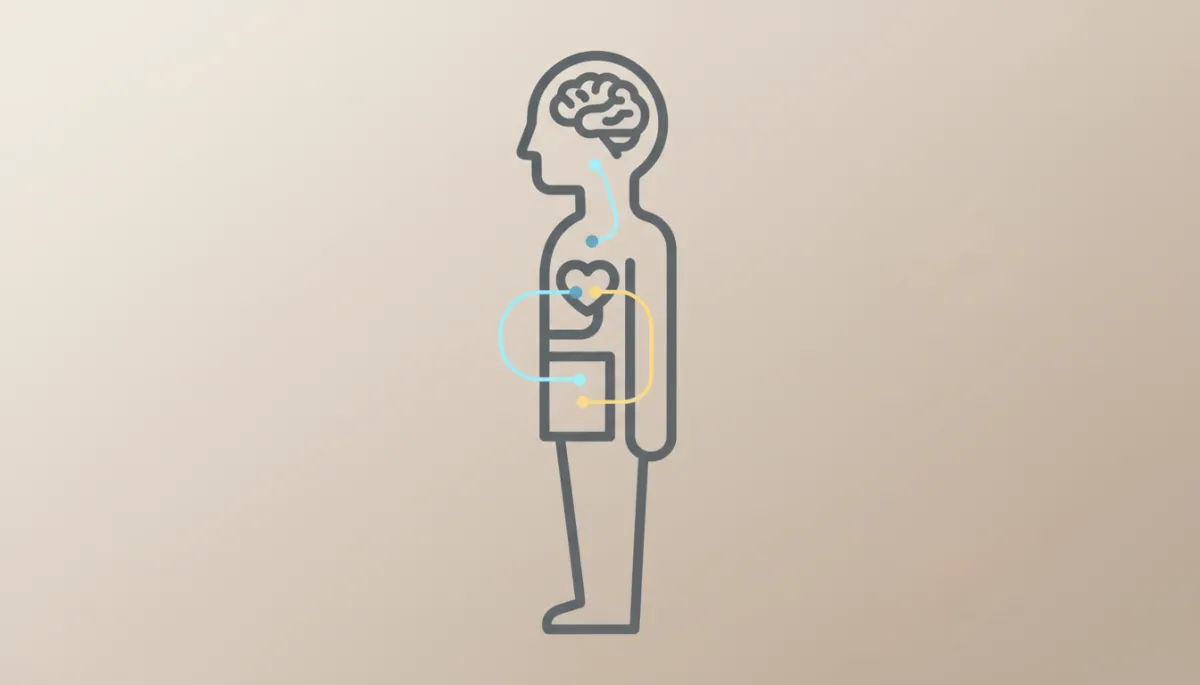
Brain, heart, and nervous system constantly exchange signals that shape how you feel and respond.
When you experience a potential threat or pressure, the autonomic nervous system may shift into a more activated state. Heart rate can increase, breathing may become faster or shallower, and muscles may tighten in preparation for action. These changes are part of your natural protective system and are not “bad” in themselves. However, when activation stays high for long periods, it may feel exhausting or overwhelming.
💡 Key idea: Nervous system regulation is not about removing stress completely. It is about developing flexibility so you can shift between activation and recovery more smoothly.
Why You May React Before You Understand Why
Emotional reactions can begin before you consciously recognise them. You might receive an unexpected email and notice your heart beating faster, your jaw tightening, or your breathing changing. Only afterwards do you realise you are feeling annoyed, anxious, or threatened. In technical terms, your interoceptive system has already detected a shift, and your nervous system has responded, even though your thinking mind is still processing what happened.
This is why self-awareness is so important. When you learn to recognise the early physical signs of stress, you can create more space between a trigger and your automatic reaction. That extra moment may support more intentional responses to stressful situations, such as choosing to pause, breathe, or communicate differently rather than reacting on autopilot.
How Nervous System Regulation Builds Self-Awareness
Nervous system regulation practices invite you to notice what is happening in your body in real time. Over weeks and months, this may support:
Greater self-awareness – understanding your personal stress patterns, such as where tension shows up first or how your breathing changes.
Emotional regulation – noticing emotions earlier and responding in ways that feel more aligned with your values.
A calmer response to stress – gradually shifting from immediate reactivity towards more measured, considered actions.
A stronger mind-body connection – feeling more in tune with your body rather than disconnected from it.
Practices such as mindfulness, gentle movement, breathwork, HRV training, and neurofeedback may all support this process. They offer different ways of observing how your brain and body respond to both stress and relaxation, and how your system may gradually become more flexible over time.
How Heart-Focused Breathing May Help
Heart-focused breathing is a simple form of breathwork that combines slow, comfortable breathing with gently placing your attention on the area around the heart or centre of the chest. Rather than trying to force relaxation, you are simply inviting awareness of what is already happening inside your body.
It may support greater awareness of internal signals, such as subtle shifts in heart rate or breathing.
It can encourage a calmer response to stress by creating a brief pause before reacting.
It may gently strengthen the mind-body connection, making it easier to notice when your nervous system is shifting into activation.
Over time, regular practice may be associated with improved stress management and more consistent emotional regulation. It is not a cure-all, but it can be a valuable part of a broader approach to brain health and wellbeing.
A Simple Heart-Focused Breathing Practice
You can try this practice almost anywhere, including at your desk, on public transport, or before bed. Aim for 2–5 minutes to start, and adjust as needed.
Sit comfortably. Rest your feet on the floor if possible and allow your shoulders to soften.
Place your attention on the centre of your chest. You may like to rest a hand there if that feels comfortable.
Breathe slowly and comfortably. There is no need to force deep breaths; simply allow a gentle, steady rhythm.
Notice changes in your breathing and body. You might observe shifts in tension, temperature, or emotional tone.
Continue for 2–5 minutes. If your mind wanders, gently bring your attention back to the chest area and your breath.
Observe without judging. Whatever you notice—calm, discomfort, numbness, or restlessness—is simply information about your current state.
Important: The purpose is not to eliminate emotions or prevent stress. It is to create a pause that may allow you to respond more intentionally, rather than reacting automatically.
Understanding Your “Gut Feeling”
Many people describe a strong internal sensation as a “gut feeling” or “intuition.” There is a real connection between the brain, gut, and nervous system, and physical sensations in the stomach or chest can reflect changes in your emotional or physiological state. For example, you might feel a heavy sensation in your chest when sad, or a fluttering feeling in your stomach when anxious or excited.
However, it is important to treat these sensations as information, not as automatic proof that something is right or wrong. A “gut feeling” is not a diagnosis and should not replace medical advice or careful reflection. Instead, you might pause and ask:
What am I feeling in my body right now?
What happened just before I noticed this sensation?
Could this be related to stress, fatigue, past experiences, or current circumstances?
This curious, non-judgemental approach can turn a vague “gut feeling” into a clearer understanding of your internal state, supporting both self-awareness and emotional regulation.
Building Emotional Awareness Over Time
Emotional awareness is a skill that develops gradually. Just as fitness improves with regular movement, awareness of internal signals tends to grow with consistent practice. Simple daily check-ins—such as a few minutes of heart-focused breathing or mindfulness—may help you become more familiar with how your body responds to different situations.
Over time, you may notice patterns: perhaps your shoulders tighten in certain meetings, your breathing changes when you receive particular types of messages, or your sleep is affected after intense days. Recognising these patterns can support earlier intervention, such as taking a short break, adjusting your schedule where possible, or using brief breathing practices to reset.
Approaches like mindfulness, HRV training, neurofeedback, and personalised neurotherapy may offer additional support. These methods can provide structured ways of observing brain and nervous system activity, and may help people explore strategies that are suited to their individual needs and goals.
How Neurotherapy Australia Can Help
At Neurotherapy Australia, the focus is on helping people understand their own brain and nervous system in a practical, compassionate way. An evidence-informed approach means drawing on current research, clinical experience, and individual assessment to guide recommendations, rather than assuming that one method will suit everyone.
Services may include neurotherapy, neurofeedback, HRV training, and brain health education, often combined in personalised programs. These approaches can support nervous system regulation by helping people see how their brain and body respond to stress and relaxation, and by exploring strategies that may improve flexibility and resilience over time.
Heart-focused breathing can be one part of this broader picture, offering a simple, accessible way to practise noticing internal signals and creating a pause before reacting. While no single technique can guarantee specific outcomes, combining everyday practices with professional support may help many people feel more informed and empowered in their approach to stress management and brain health.
Key Takeaways
Interoception is your brain’s ability to sense internal signals such as heart rate, breathing, and muscle tension.
Heart-focused breathing may support self-awareness, emotional regulation, and a calmer response to stress by creating a brief pause before reacting.
Physical sensations, including a “gut feeling,” can provide useful information about your internal state but are not a substitute for reflection or medical advice.
Consistent nervous system regulation practices—such as mindfulness, breathwork, HRV training, and neurofeedback—may help build a stronger mind-body connection over time.
Neurotherapy Australia offers an evidence-informed approach to neurotherapy and brain health, supporting people to better understand and work with their own nervous system.
Your nervous system is communicating with you all the time. Changes in breathing, heart rate, muscle tension, and mood are not failures or flaws; they are signals. Learning to notice them through practices like heart-focused breathing does not mean controlling every emotion. Instead, it offers a way to pause, listen, and choose how you want to respond.
If you are curious about how interoception, nervous system regulation, and personalised approaches such as neurotherapy, HRV training, and neurofeedback might support your wellbeing, you do not have to explore it alone. Neurotherapy Australia can provide guidance, assessment, and tailored programs that take your individual history, goals, and strengths into account.
To learn more about heart-focused breathing, brain health, and evidence-informed support options, you are welcome to contact Neurotherapy Australia. A conversation may be a helpful first step towards building a calmer, more intentional relationship with your own mind and body.