How Sleep Enhances Memory and Brain Health
Sleep and Memory, Brain Health Gold Coast, Nervous System and Sleep
How Does Sleep Impact Memory?
Have you ever studied something in the evening, gone to sleep, and woken up the next morning surprised by how clearly you remember it? Or noticed that after a broken night’s sleep, you misplace your keys, lose your train of thought, or reread the same sentence over and over? These everyday experiences are gentle reminders that sleep and memory are closely connected.
Many people imagine sleep as a time when the brain simply “switches off.” In reality, the sleeping brain is active and organised. While you rest, your brain is busy sorting, strengthening and integrating information, supporting both learning and long‑term brain health. For adults on the Gold Coast who care about focus, memory, mood and healthy ageing, understanding this relationship can be an important part of taking care of your brain.
Your Brain Doesn’t Switch Off When You Sleep
When you fall asleep, your conscious awareness fades, but your brain does not shut down. Instead, it moves through organised patterns of activity across different sleep stages. These stages include lighter sleep, deeper slow‑wave sleep and rapid eye movement (REM) sleep. Each stage appears to contribute in different ways to learning, memory and emotional processing.
During the night, groups of brain cells fire in coordinated bursts. Some of these activity patterns are thought to help the brain:
Strengthen connections involved in new learning and memory
Process and organise emotional experiences from the day
Support attention, concentration and decision‑making for the next day
Contribute to physical and mental recovery, including immune and metabolic processes
One of the key jobs of the sleeping brain is memory consolidation – the gradual process through which some of the information you encounter moves from fragile, short‑term traces toward more stable, longer‑term patterns. Sleep does not record a perfect copy of every moment. Instead, it seems to help the brain decide what to strengthen, what to link together and what to let fade into the background.
How Does Sleep Help Memory?
Memory can feel mysterious, but we can think about it in a simple sequence: Learning → Encoding → Consolidation → Recall. Each step depends on the others, and sleep weaves through the whole process.
Learning and Encoding: Taking Information In
During the day, your senses and attention bring information into your brain. When you focus on a conversation, a training course or a new route through Southport, your brain begins to encode that information. Encoding is the first step in turning experience into memory. It relies heavily on attention, working memory and alertness – all of which can be influenced by how you slept the night before.
Consolidation: Strengthening and Organising
Consolidation is the process through which certain memories become more stable over time. Research suggests that both deep slow‑wave sleep and REM sleep may support different aspects of this process. For example, some studies indicate that slow‑wave sleep may be helpful for consolidating facts and skills, while REM sleep may be more involved in emotional and procedural learning. The science is still evolving, and there is no single “memory stage” of sleep, but the overall pattern is clear: healthy sleep supports memory consolidation.
Importantly, this does not mean that everything you learn is permanently stored while you sleep. The brain is selective. It appears to strengthen some connections, integrate new information with existing knowledge, and down‑prioritise information that seems less relevant. Over time, this helps create more efficient and organised memory networks.
Recall: Accessing What You Know
Recall is what you notice in everyday life: remembering a name, following a recipe, or drawing on your skills at work. When sleep has supported both encoding and consolidation, recall often feels smoother and more reliable. When sleep has been disrupted, you may still “know” the information, but accessing it can feel slower or less precise, particularly under pressure or stress.
📌 Key Takeaway: Sleep does not act like a simple “save button,” but it creates conditions that can help your brain organise, stabilise and integrate what you learn.
Why Sleep Matters Before You Learn
We often hear that sleep helps you after you study, and that is true. But sleep also matters before you learn. If you arrive at work, university or a TAFE course after several short or broken nights, your brain may be operating with less bandwidth for new information.
Attention: Poor sleep can make it harder to stay focused on a task or conversation, especially if it is complex or not naturally exciting.
Concentration: You may notice more mind‑wandering, zoning out, or the need to reread information.
Working memory: Holding information in mind while you use it – such as remembering a phone number long enough to dial it – can feel more effortful when you are tired.
Alertness: Slower reaction times and reduced mental sharpness can affect how quickly you take in new material.
When these systems are under strain, the brain may still encode information, but it can be patchier and less complete. In practical terms, this might show up as missing key details from a meeting, forgetting parts of a lecture, or needing extra repetition when learning a new skill at work or in the gym. In this way, sleep is part of the learning process, not separate from it.
What Happens When You Don’t Get Enough Sleep?
Most adults on the Gold Coast have had nights of poor or shortened sleep – from shift work, parenting, study deadlines, travel or stress. One unsettled night can leave you feeling foggy, but it does not mean you have caused permanent damage to your memory. The brain is resilient. However, ongoing insufficient or disrupted sleep may start to affect day‑to‑day cognitive performance more noticeably.
Concentration and focus: You may find it harder to stay with a task, especially if it is detailed or repetitive. Distractions feel louder and more tempting.
Reaction time: Slower responses can affect driving, sport, and everyday decisions, even when you feel you are “pushing through.”
Learning and recall: New information may not “stick” as easily. You might recognise material but struggle to recall it quickly or accurately when you need it.
Decision‑making: Tired brains may rely more on habits or quick reactions, and it can feel harder to weigh up options calmly and clearly.
Emotional regulation: Lack of sleep can make everyday challenges feel bigger. You may notice more irritability, sensitivity or emotional ups and downs.
⚠️ Important: Occasional poor sleep is common and usually temporary. If sleep difficulties are persistent, distressing or affecting your ability to function, it can be helpful to speak with your GP or another qualified health professional for personalised advice.
It’s Not Just About How Long You Sleep
Many people focus on the number of hours they spend in bed. While sleep duration does matter, it is only one part of the picture. Sleep quality, regularity and continuity also play important roles in supporting memory and brain health.
Regularity and Routine
Your brain and body follow a roughly 24‑hour rhythm, often called the circadian rhythm. Going to bed and waking up at very different times each day can make it harder for this internal clock to stay in sync. A relatively consistent schedule – even on weekends – can support more predictable sleep patterns and, in turn, more consistent daytime concentration and mood.
Continuity and Night‑Time Awakenings
Waking briefly during the night can be normal. However, frequent or prolonged awakenings can fragment sleep. This may reduce the time your brain spends in deeper, more restorative stages that appear to support memory consolidation and emotional processing. You might technically “sleep” for many hours but still feel unrefreshed if your sleep is highly broken.
Environment, Stimulation and Lifestyle Factors
Several everyday factors can influence sleep quality and, over time, may affect how well sleep supports memory and learning:
Sleep environment: Light, noise, temperature and comfort can all make it easier or harder to stay asleep. A dark, cool and relatively quiet room often supports better continuity.
Evening stimulation: Intense work, emotionally charged conversations, gaming or scrolling can keep the brain in a more alert state, making it harder to wind down.
Caffeine and alcohol: Caffeine later in the day can delay sleep for some people, while alcohol may help you fall asleep but can fragment sleep later in the night.
Stress and workload: High demands without enough recovery time can keep the nervous system on high alert, which may show up as difficulty switching off at night.
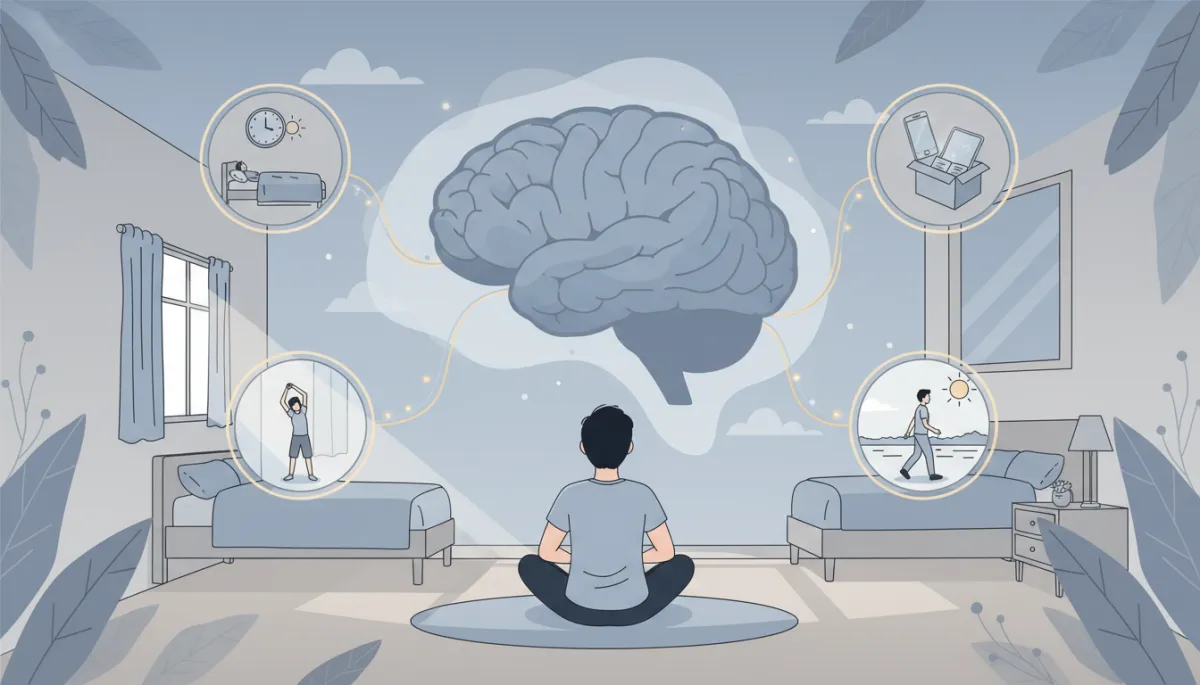
Consistent routines and small lifestyle changes can help create conditions for healthier sleep.
Simple Ways to Support Sleep and Memory
There is no perfect routine that suits everyone, and healthy sleep habits do not guarantee sharper memory. However, some practical strategies can support both sleep quality and cognitive performance, providing a stronger foundation for learning, focus and emotional balance.
Maintain a Consistent Sleep and Wake Schedule
Aim to go to bed and wake up at similar times most days, including weekends where possible. This regularity can help your body’s internal clock anticipate sleep, making it easier to fall asleep and wake feeling more refreshed. Even a 30–60 minute window can be helpful for many people.
Create a Calming Wind‑Down Routine
Give your brain time to transition from “day mode” to “night mode.” This may include dimming lights, reducing stimulating screen use, taking a warm shower, reading something light, or using gentle relaxation practices. The goal is not perfection but a predictable, calming pattern that signals to your nervous system that it is safe to slow down.
Move Regularly and Seek Daytime Light
Regular physical activity supports overall health and may also support sleep. Gentle movement, such as walking along the Broadwater, yoga, swimming or strength training, can help regulate energy levels and mood. Exposure to natural light during the day, especially in the morning, can also support your sleep‑wake rhythm and may make it easier to feel sleepy at night.
Be Thoughtful with Caffeine and Evening Stimulation
Everyone’s sensitivity to caffeine is different, but for some adults, coffee, energy drinks or strong tea later in the day can delay sleep or reduce sleep depth. Similarly, intense work, gaming or emotionally charged content late at night may keep your brain in “problem‑solving mode.” Experimenting with a gentler evening pace can sometimes make a noticeable difference to how easily you drift off.
Give Yourself Enough Opportunity to Sleep
Healthy sleep is not only about what happens in bed. It also depends on whether your schedule allows enough time for rest. If your days are packed from early morning to late at night, your brain has less opportunity to move through the full cycles of sleep that may support memory consolidation and recovery. Where possible, protecting a realistic sleep window is an investment in your long‑term brain health, not a luxury.
💡 Pro Tip: View these strategies as gentle experiments, not strict rules. Small, sustainable changes are more likely to support your sleep and memory over time than short‑term, all‑or‑nothing efforts.
What About Stress? The Nervous System and Sleep
Sleep does not happen in isolation. It is closely tied to your nervous system. When you are under ongoing stress – whether from work, relationships, finances or health concerns – your body may spend more time in a state of increased alertness. This can be helpful in short bursts but, over time, may make it harder for some people to relax into sleep or stay asleep through the night.
Poor or insufficient sleep can, in turn, influence how you experience stress. After a run of short nights, you may notice:
More difficulty concentrating on tasks that used to feel manageable
Greater emotional reactivity or sensitivity to everyday challenges
A sense of being “wired and tired” – exhausted but unable to switch off
This creates a two‑way relationship: stress can affect sleep, and sleep can affect how you experience stress. Supporting your nervous system during the day – through movement, meaningful breaks, connection, breathing practices or other personalised strategies – can sometimes help create a more settled foundation for sleep at night. At the same time, improving sleep where possible may support your capacity to cope with everyday demands.
Understanding Your Brain and Nervous System
Sleep is one piece of a larger puzzle. Your cognitive performance – including memory, focus, learning and emotional regulation – is influenced by many interacting factors: sleep quality, stress, lifestyle, environment, individual brain patterns and nervous‑system regulation. For some people, gaining a clearer picture of these patterns can be a helpful step toward making informed changes.
At Neurotherapy Australia on the Gold Coast, our work is grounded in helping people better understand their own brain and nervous‑system profiles. Rather than offering quick fixes, we focus on assessment, education and personalised training to support long‑term brain health and performance.
Depending on individual needs and goals, this may include:
qEEG brain mapping – a detailed recording of electrical activity at the scalp, used to explore patterns of brain function. qEEG is not used to diagnose memory disorders, sleep disorders or neurological conditions, but it may provide additional information about how different regions are communicating and regulating.
Heart rate variability (HRV) measurement – a way of observing how your heart rhythm changes from beat to beat, which can offer insight into how your autonomic nervous system is responding to stress and recovery.
Wellbeing questionnaires – structured tools that help capture your experience of sleep, mood, focus, energy and day‑to‑day functioning in a systematic way.
Brain and nervous‑system education – practical explanations and guidance to help you understand how your brain and body respond to stress, sleep and everyday demands.
Personalised brain training and nervous‑system training – individualised programs designed to support healthier patterns of brain and nervous‑system activity over time, guided by your goals and assessment findings.
These approaches are designed to complement, not replace, medical and psychological care. They do not diagnose memory disorders or sleep disorders. Instead, they can offer a richer picture of your unique patterns, which may help inform practical next steps for supporting sleep, attention, learning and overall brain health.
The Brain & Nervous System Assessment at Neurotherapy Australia is a personalised assessment that brings together qEEG, HRV, questionnaires and clinical discussion. The aim is to provide clear, understandable information about your brain and nervous‑system patterns, so you can make informed decisions about your next steps.
Sleep Isn’t Wasted Time – It’s Part of the Work
In a busy world, it can be tempting to treat sleep as optional – something to cut back when life gets full. Yet for your brain, sleep is part of the work. While you rest, your brain continues to process the day’s experiences, support memory consolidation, regulate emotions and prepare you for what comes next. Over months and years, these nightly processes contribute to your learning, resilience and long‑term brain health.
Sleep alone does not guarantee perfect memory or protect against all cognitive changes. However, understanding how sleep, stress and individual brain patterns interact can be a valuable part of supporting your mind over the long term. For adults on the Gold Coast who are curious about their own brain health, this awareness can be the beginning of a more informed, compassionate approach to looking after both body and brain.
Explore Your Brain & Nervous System on the Gold Coast
If you are noticing ongoing difficulties with sleep, concentration or memory – or you are simply curious about your brain and nervous‑system patterns – you may like to learn more about Neurotherapy Australia’s Brain & Nervous System Assessment in Ashmore on the Gold Coast:
38/207 Currumburra Road,
Ashmore QLD 4214,
Gold Coast, Australia
This in‑person assessment provides personalised, evidence-informed insights to help guide practical next steps for supporting your sleep, memory, learning, and overall brain health. It is not a diagnostic service, and it does not replace medical or psychological care, but it can form a useful part of a broader, collaborative approach to your wellbeing.
Gentle Invitation: If you would like to explore how your sleep, stress, and brain patterns may work together, reach out to Neurotherapy Australia to learn more about the Brain & Nervous System Assessment and whether it may suit you.
Ever wonder what's going on inside your brain? Book a Brain and Nervous System Assessment today! Click here to find out more →