Improve Sleep by Calming Your Nervous System
Sleep Health, Nervous System Regulation, Brain Health Gold Coast
Sleeping Issues? Your Nervous System May Need Help Switching Off
You are exhausted. You finally get into bed on the Gold Coast night, the house is quiet, the lights are low. Your body feels heavy, but your mind is wide awake. Thoughts start lining up: the email you sent, the conversation you had, tomorrow’s to‑do list, that one thing you forgot. You are tired, but you are not drifting off. It can feel confusing, and for many people, frustratingly familiar.
Feeling tired is not always the same as being ready to sleep. Sleep is not a simple on–off switch; it is a gradual transition where your brain, body and environment all play a role. For some people, ongoing stress, high daily stimulation or a “switched‑on” nervous system can make that transition harder. Supporting nervous system regulation and sleep can be one useful part of a broader approach, alongside healthy routines and, when needed, professional care. It is not the only factor, and it does not explain every sleep problem, but it can be an important piece of the puzzle.
Why Can It Be Hard to Switch Off?
Healthy sleep is a coordinated process. As night approaches, your brain activity changes, hormone levels shift, body temperature drops slightly, and your behaviour and environment ideally become quieter and less demanding. All of this supports the move from daytime alertness toward rest and recovery.
Modern life on the Gold Coast can pull that process in the opposite direction. Long workdays, late emails, family responsibilities, social media, streaming shows, training schedules and bright evening light can all keep your brain engaged. Even if you feel physically worn out, your nervous system may still be in “daytime mode” – alert, scanning, planning and responding to demands. That can make it harder to move smoothly into sleep, especially if this pattern repeats most nights.
Stress and emotional load can add another layer. When you are worried, under pressure or going through a big life change, your body often responds by increasing alertness. Your brain is trying to help you cope, but the timing can feel unhelpful when you are lying in bed hoping to drift off. This does not mean anything is “broken”; it means your system is doing what it has learned to do – stay ready – even when you would prefer it to settle.
What Happens to Your Body When You're Stressed?
To understand the link between sleep and stress, it helps to look at the autonomic nervous system – the part of your nervous system that runs automatically in the background. It helps regulate heart rate, breathing, digestion, blood pressure and many other functions without you needing to think about them. You can think of it as your body’s built‑in “gear system,” helping you shift between action and recovery throughout the day and night.
When you face a demand – a tight deadline, a crying child, a close call in traffic – your body can move into a more activated state. You might notice:
Increased alertness or a “switched‑on” feeling
Changes in heart rate, sometimes faster or more noticeable beats
Faster or shallower breathing, especially in the upper chest
Muscle tension in the jaw, neck, shoulders or back
Increased mental activity – racing thoughts, problem‑solving, scanning for what might go wrong
These are normal, healthy responses. In the right context, they are helpful. They help you focus in a meeting, react quickly when driving, or perform in sport. The challenge comes when this activated state lingers into the evening, or becomes your “new normal,” leaving less room for the calmer states that support sleep and recovery. In that situation, nervous system and sleep can start to feel at odds with each other.
When the Day Ends but Your Brain Doesn't
Many adults describe a similar pattern: feeling tired in the evening, but becoming mentally alert the moment they lie down. You might notice your mind:
Replaying the day – conversations, decisions, things you wish you had done differently
Planning tomorrow – tasks, schedules, worries about how you will cope if you are tired
Checking devices “one last time” – emails, messages, news, social media, which can keep your brain online and your eyes exposed to stimulating light
Staying connected to work – mentally drafting replies or thinking through projects even after you have left the office or closed the laptop
Sleep is not simply a decision to “switch off”. You cannot force your brain into silence on command, and trying harder to sleep often backfires, increasing frustration and alertness. None of this means you are doing something wrong. It reflects how your brain and nervous system have adapted to the demands and habits of your days. For some people, especially those under ongoing stress, it can take deliberate practice to create a gentler bridge between activity and rest.
Sleep and Nervous System Regulation
Nervous system regulation and sleep are closely linked. Regulation does not mean being calm all day. It means having the capacity to move between states as needed – to focus when it matters, respond to challenges, and then gradually settle when the demand has passed. One simple way to picture this is:
Activation → Settling → Sleep → Recovery
Activation – Your system gears up to meet a demand: work, parenting, exercise, problem‑solving, social situations. Alertness rises, your body mobilises energy, your mind becomes more focused or busy.
Settling – The demand eases. Ideally, your body starts to down‑shift: breathing slows, muscles soften, thoughts become less urgent. This is the “bridge” between daytime mode and sleep.
Sleep – Your brain moves through different sleep stages, supporting memory, emotional processing, immune function and physical repair. This is where much of the deeper recovery occurs.
Recovery – You wake with at least some degree of restoration, ready to face the new day’s demands. Over time, this cycle supports brain health, mood, performance and wellbeing.
When life is busy, that settling phase can get squeezed or skipped. You might go straight from emails to bed, from bright screens to darkness, from intense training to trying to sleep. Over time, this can contribute to sleep problems for some people, especially if stress or emotional load is also high. Supporting nervous system regulation is about creating more chances for settling and recovery, not about avoiding activation altogether.
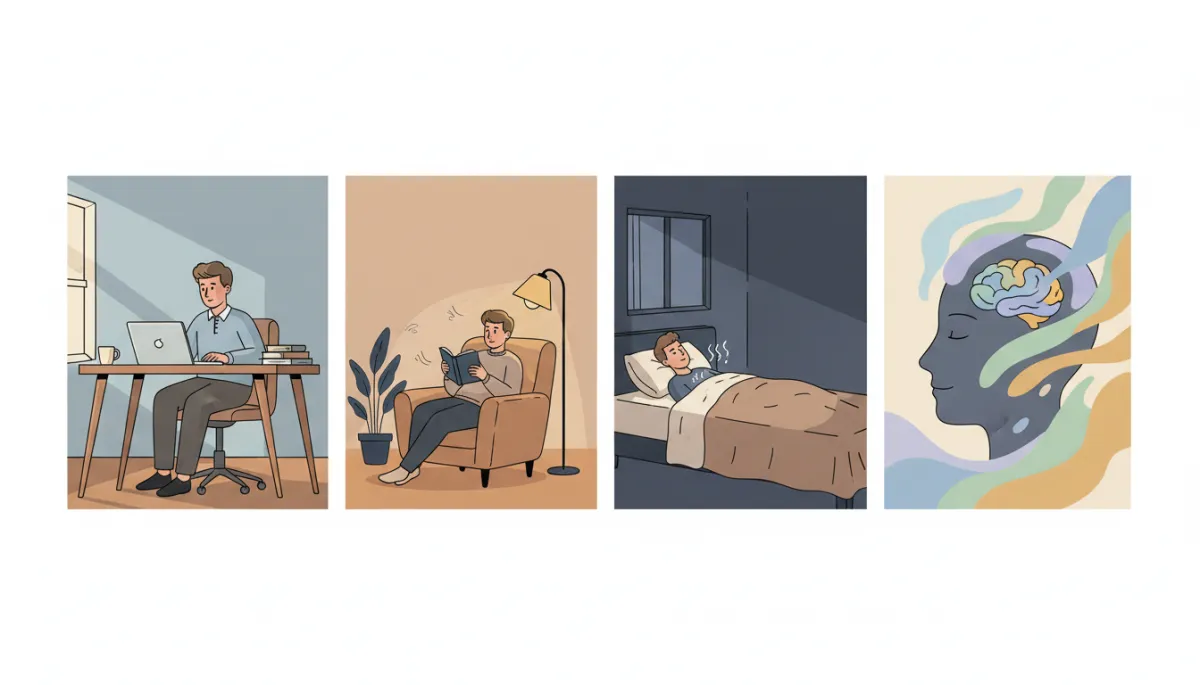
Building a gentle bridge from activation to rest can support more restorative sleep over time.
One Simple Strategy to Try Tonight
There is no single technique that works for everyone, and no breathing exercise can guarantee sleep. However, for many people, gentle breathing can be a simple way to support the shift from activation toward settling. Think of it as offering your nervous system a quieter signal at the end of the day, rather than a command to sleep on demand.
You might like to try this slow, comfortable breathing practice:
Sit or lie comfortably. You could be on your bed, on a sofa or in a favourite chair. Choose a position that feels supported rather than rigid.
Relax the shoulders. Let them drop away from your ears. You can gently roll your neck or shrug and release your shoulders if that feels helpful.
Breathe gently and comfortably. Take an easy breath in through your nose if you can, without forcing a deep inhale. Then allow your breath to flow out, like a soft sigh, without pushing it.
Let the exhale be slightly longer than the inhale, if comfortable. For example, a natural in‑breath, followed by a slightly slower, softer out‑breath. There is no need to count or reach a specific breathing rate unless you enjoy that structure.
Continue for a few minutes. You might set a gentle timer for three to five minutes, or simply stop when you feel ready. The aim is comfort, not performance.
The goal is not to “knock yourself out”, but to give your body a small cue that the day is easing. If slow breathing feels uncomfortable, dizzying or increases your anxiety, it is completely fine to stop. Another calming activity – such as reading a light book, listening to gentle audio or stretching softly – may suit you better. Supporting nervous system regulation is about finding what feels workable for your body, not forcing a technique that does not feel right.
Other Ways to Support Better Sleep
Lifestyle, environment and routine all influence sleep health. No single strategy suits everyone, and change can take time. However, the following habits may help support your nervous system and sleep, especially when combined with appropriate medical or psychological care where needed:
Keep a consistent schedule. Going to bed and waking at similar times most days can help your body clock find a rhythm. Even small shifts toward regularity can be useful over time, especially for people with difficulty sleeping.
Reduce stimulating activities before bed. Aim for a wind‑down period where you step away from intense work, problem‑solving, heated discussions and fast‑paced screens. This gives your nervous system a chance to move from activation toward settling.
Create a comfortable sleep environment. A cool, dark, quiet and comfortable bedroom can support sleep and nervous system recovery. For some people, earplugs, eye masks or a fan can make a difference. Others find gentle background sound soothing. Experiment with what feels best for you.
Limit caffeine later in the day. Coffee, energy drinks and some teas can stay in your system for hours. Reducing or avoiding caffeine from mid‑afternoon onwards may help some people who notice sleep and stress are linked for them. Everyone’s sensitivity is different, so paying attention to your own response can be helpful.
Get regular daytime movement. Gentle to moderate physical activity can support overall health, brain health and sleep. This does not have to mean intense training; walking, stretching, swimming or yoga can all be valuable. Some people find very intense exercise close to bedtime makes it harder to settle, so timing may be worth noticing.
Manage light exposure. Natural light during the day, especially in the morning, can help regulate your body clock. In the evening, softer, warmer lighting and reducing bright screens can signal to your brain that night is approaching, supporting nervous system regulation and sleep.
Create a predictable wind‑down routine. A simple, repeatable sequence – perhaps a warm shower, herbal tea, light reading or gentle stretching – can act as a cue that the day is closing. Over time, your nervous system can start to associate this routine with moving toward rest.
These strategies are tools, not tests. If they do not work perfectly, it does not mean you have failed. They are starting points that may support sleep support Gold Coast adults who are looking to create a kinder environment for their nervous system and sleep, alongside any other care they may be receiving.
When Sleep Problems Keep Happening
If you have the occasional restless night, that is usually a normal part of life. However, when sleep problems persist, become severe or start affecting your ability to function during the day, it is important to look more closely. Ongoing sleep difficulties can be linked with many different factors, including:
Stress, workload and emotional demands
Lifestyle patterns and sleep schedule, including shift work or irregular hours
Medical conditions, such as pain, breathing issues or hormonal changes
Mental health factors, including anxiety, low mood or trauma‑related symptoms
Medications, caffeine, alcohol or other substances that can influence the sleep–wake cycle
Sleep disorders, such as breathing‑related conditions or movement‑related issues
Environmental factors – noise, light, temperature or an uncomfortable bed
Because there are many possible contributors, it is important not to assume that stress or nervous‑system activation is the only cause. If your sleep difficulties are frequent, long‑lasting or worrying, speaking with an appropriately qualified healthcare professional – such as your GP, a sleep physician, psychologist or other relevant specialist – is an important step. They can help explore possible causes, rule out medical issues and discuss evidence‑based treatment options. Nothing in this article is a diagnosis or a replacement for individual medical or psychological advice.
Understanding Your Individual Patterns
Alongside medical and psychological care, some people find it helpful to better understand their own brain and nervous‑system patterns. Because nervous system regulation and sleep are so closely linked, gaining insight into how your system tends to activate and settle can provide useful context for your experience of stress and sleep, recovery and performance.
At Neurotherapy Australia on the Gold Coast, the focus is on education, assessment and personalised training that support brain health Gold Coast clients in understanding their unique patterns. This is not about diagnosing sleep disorders, and it does not replace medical or psychological assessment. Instead, it offers another lens on how your brain and nervous system may be functioning in the context of your daily life, stress load and recovery.
Depending on your goals, a Brain & Nervous System Assessment may include:
qEEG brain mapping – recording brainwave activity and comparing it to reference databases to identify patterns that may be relevant to attention, mood, arousal and other functions related to nervous system and sleep. This does not diagnose sleep disorders but can offer additional information for discussion.
Heart rate variability (HRV) measurement – observing variations in time between heartbeats, which can reflect aspects of autonomic nervous‑system flexibility and recovery. HRV is not a diagnostic test for sleep conditions, but it can contribute to understanding how your system responds to stress and settles afterward.
Relevant wellbeing questionnaires – exploring sleep patterns, stress, mood, energy and lifestyle factors to build a fuller picture of your current experience and priorities for change.
Nervous‑system education – understanding how sleep and nervous system states interact, and how daily choices may support or strain your system over time. This can help you make more informed decisions about routines and recovery.
Personalised brain training and nervous‑system training – where appropriate, tailored neurofeedback or related approaches may be offered to support regulation goals. These are designed to complement, not replace, care from your existing healthcare providers.
The aim of the brain and nervous system assessment Gold Coast service is to provide information, context and practical next steps – not to determine the single cause of anyone’s sleep difficulties. Many factors influence sleep, and understanding your individual patterns is one part of a broader, collaborative approach to wellbeing.
Neurotherapy Australia’s in‑person Brain & Nervous System Assessment is available at:
38/207 Currumburra Road,
Ashmore QLD 4214,
Gold Coast, Australia.
Better Sleep Starts with Understanding, Not Pressure
Better sleep is rarely about trying harder to sleep. In fact, pressure and self‑criticism can make the nervous system more alert, pulling you further from the rest you are seeking. Sometimes, the most useful step is to gently explore what may be keeping your mind and body alert in the first place – your stress load, routines, environment, and how your nervous system tends to respond to daily life.
Understanding your individual patterns can help you make more targeted choices, whether that means adjusting your evening routine, seeking medical assessment, working with a psychologist, or exploring how brain and nervous‑system training might fit within your broader care plan. You do not have to navigate this alone, and there is no single “right” path – only the one that best supports your health, values and circumstances.
Explore Your Brain & Nervous System with Neurotherapy Australia
If you are on the Gold Coast and curious about how your brain and nervous system may be contributing to your experience of sleep and stress, recovery or performance, you may like to learn more about Neurotherapy Australia’s Brain & Nervous System Assessment. This personalised assessment is designed to help you:
Explore your individual brain and nervous‑system patterns in a structured, supportive setting
Understand how these patterns may relate to your sleep, stress load, focus or recovery
Identify practical, realistic next steps that can complement your existing healthcare and lifestyle strategies
To find out more, you can contact Neurotherapy Australia, ask about the Brain & Nervous System Assessment, and discuss whether it may be appropriate within your broader care. There is no pressure to commit; the focus is on informed choice and collaborative support for your sleep health, nervous‑system regulation and overall wellbeing.
Ever wonder what's going on inside your brain? Book a Brain and Nervous System Assessment today! Click here to find out more →