Quick Stress Relief: 3-5 Min Nervous System Reset
Nervous System Regulation, Stress Management, Breathwork
3 to 5 Minutes to Support Nervous System Regulation
When stress builds, it can be difficult to switch off. This article explores how your nervous system responds to stress and how a simple, heart focused breathing practice may gently support nervous system regulation in just a few minutes.
Introduction
When stress builds, the body can remain in a heightened state of activation. You may notice a racing mind, tight muscles, difficulty switching off at night, or feeling overwhelmed, anxious, frustrated, or irritable. These experiences are common and are closely linked to how your nervous system responds to ongoing demands.
The aim of nervous system regulation is not to remove stress completely. Stress is part of everyday life and your body’s natural stress response is there to protect you. Instead, the focus is on supporting your ability to move between activation and recovery more effectively, so that stress does not remain “switched on” for longer than it needs to be.
One gentle option is slow, comfortable breathwork combined with heart focused breathing – bringing soft attention to the centre of the chest. This simple practice can be done almost anywhere and may support a calmer physiological state in just three to five minutes.
What Happens to Your Nervous System During Stress?
Your nervous system is constantly taking in information from both your environment and your body. When your brain detects a potential threat or a significant stressor, the sympathetic nervous system becomes more active. This is often described as the “fight or flight” part of your autonomic nervous system, which manages many automatic functions such as heart rate, breathing, and digestion.
Your heart rate may increase.
Your breathing may become faster or more shallow.
Muscles can tighten in preparation for action.
You may feel more alert or on edge.
Thoughts may speed up, making it harder to relax or focus.
These changes are not inherently harmful. In fact, they are part of a normal protective system designed to help you respond quickly when something matters or feels threatening. The challenge often arises when your body stays in this heightened state long after the stressful situation has passed, or when stressors are frequent and ongoing.
Understanding the Sympathetic and Parasympathetic Nervous Systems
The autonomic nervous system has two key branches that work together to help you adapt to changing situations: the sympathetic nervous system and the parasympathetic nervous system. You can think of them as different sides of the same regulatory system rather than good and bad parts of the body.
The sympathetic nervous system prepares you for action. It supports your ability to respond to challenges, mobilise energy, and stay alert when something needs your attention.
The parasympathetic nervous system is more involved in “rest, digest, and recover”. It supports digestion, restoration, and other processes that help your body return towards a calmer state.
Healthy nervous system regulation does not mean staying calm all the time. Instead, it involves being able to move between activation and recovery as your circumstances change. This flexibility is an important part of resilience, emotional regulation, and overall brain health.
Why It Can Be Difficult to Switch Off
In modern life, many stressors do not have a clear beginning and end. You might finish work, yet your mind continues to replay conversations or plan tomorrow’s tasks. You may be physically at home, but mentally still at your desk or worrying about family, finances, or health. At night, you may lie in bed while your thoughts keep going, making it harder to fall asleep or stay asleep.
In these situations, your body may be safe, but your brain continues to detect demands and potential threats. The sympathetic nervous system can remain more active, keeping your stress response “online”. Over time, this can contribute to ongoing tension, changes in sleep routines, irritability, or difficulty with emotional regulation. While breathing exercises cannot cure conditions such as anxiety or insomnia, they may offer a small, practical way to create moments of pause and support your natural recovery processes.
How Slow Breathing May Support Regulation
Breathing is one of the few automatic functions that you can also consciously influence. It is closely linked with both the sympathetic and parasympathetic branches of the autonomic nervous system. When stress is high, breathing often becomes faster, shallower, or more irregular, which can reinforce a sense of urgency or tension.
Slowing your breathing in a comfortable way can gently signal to your body that it is safe enough to begin shifting towards recovery. Research into heart rate variability (HRV) suggests that breathing at a slow, steady rhythm may support more balanced activity between the sympathetic and parasympathetic systems. HRV refers to the natural variation in time between heartbeats and is often used as one indicator of how flexibly your nervous system can respond to stress and then return towards baseline.
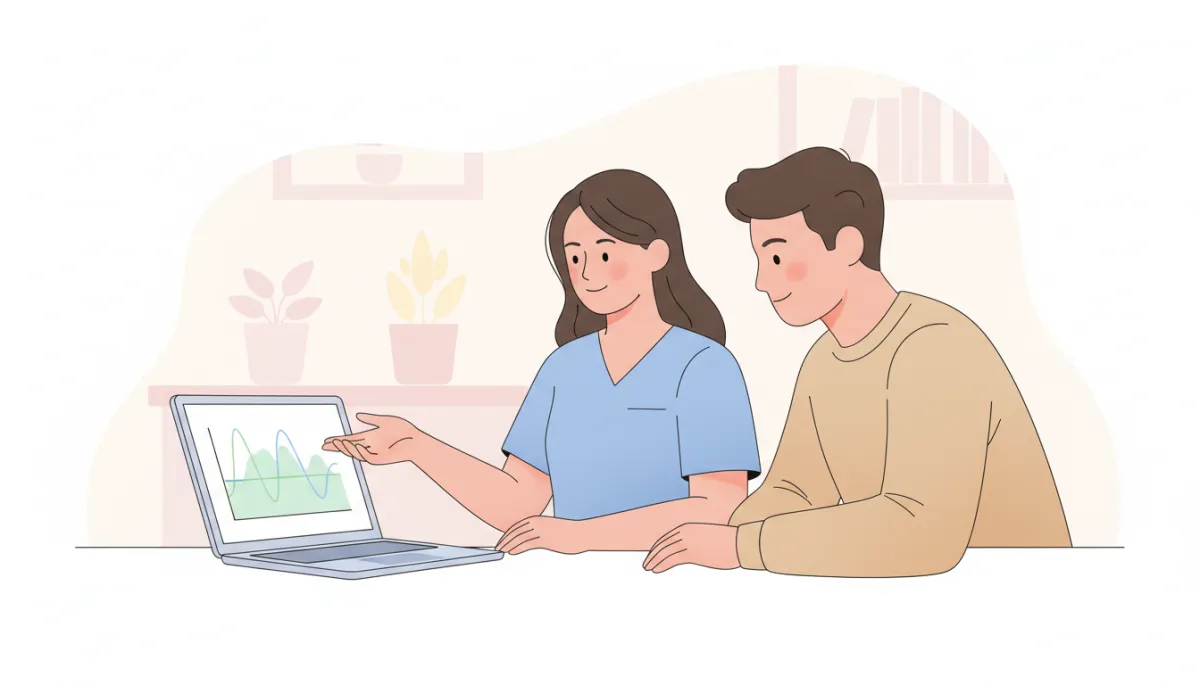
HRV and breathing patterns can offer useful information about how your nervous system responds to stress.
Heart focused breathing adds another layer by inviting your attention to rest around the centre of your chest. This combination of slow, comfortable breathing and gentle awareness may support a calmer physiological state and a stronger sense of connection with your body. The aim is not to force relaxation, but to create an opportunity for your nervous system to settle if it is able to in that moment.
A Simple 3 to 5 Minute Practice
The following practice is one way to explore heart focused breathing. It is intended as a gentle nervous system regulation exercise, not as a treatment for medical or mental health conditions. If you have concerns about your breathing or health, please seek advice from an appropriate health professional before making changes to your routine.
Find a comfortable position. Sit or lie down in a way that feels supported. You may wish to close your eyes or soften your gaze.
Relax your shoulders and jaw. Notice any unnecessary tension. Gently allow your shoulders to drop and your jaw to soften, without forcing anything to change.
Breathe in gently for approximately 5 to 6 seconds. Let the breath come in smoothly through your nose if that is comfortable. The breath does not need to be unusually deep.
Breathe out gently for approximately 5 to 6 seconds. Allow the exhale to be soft and unhurried. Aim for a steady, even rhythm that feels sustainable rather than strained.
Bring your awareness to the centre of your chest. Gently focus your attention around the heart area. You may like to place a hand there to help anchor your awareness.
Continue for 3 to 5 minutes. Maintain the comfortable breathing rhythm and heart focused awareness. If your mind wanders, kindly guide it back to the sensation of breathing and the area around your chest.
Notice how you feel. When you finish, take a moment to observe any changes in your breathing, muscle tension, thoughts, or overall sense of calm. You may notice a shift, or you may notice very little. Both experiences are valid. The purpose is to practise, not to force a particular result.
💡 Important: People respond differently to breathing practices. If you feel light-headed, uncomfortable, or distressed at any point, return to your natural breathing and gently open your eyes. Breathing should remain comfortable rather than forced.
Why Consistency Matters
A single breathing exercise can offer a helpful pause, especially during a stressful moment. However, nervous system regulation is a skill that tends to develop with regular practice. Just as physical fitness builds over time, your capacity to notice activation and support recovery can strengthen with consistent, small steps.
You might choose to include three to five minutes of slow, heart focused breathing at predictable times, such as:
After waking up, to begin the day with awareness and intention
Before starting work or study, to help you arrive more fully in the task ahead
During an afternoon break, to create a reset between different parts of the day
Before bed, as part of a calmer evening routine
After a stressful event, to offer your body a chance to begin unwinding
The goal is not perfection. It is to build realistic habits that support stress management, emotional regulation, self-awareness, and long-term resilience. Even brief, regular practices can gradually support healthier patterns in how your nervous system responds to everyday demands.
Other Ways to Support Nervous System Regulation
Breathwork is one helpful tool, but it is only one part of a broader approach to wellbeing and brain health. Other foundations that may support nervous system regulation include:
Consistent sleep routines that support recovery and repair
Regular physical activity, adjusted to your capacity and health needs
Time away from screens, especially before bed, to reduce ongoing stimulation
Mindfulness and gentle body-based practices that build self-awareness
Nourishing food, hydration, and supportive daily routines
Supportive relationships and social connection, which can buffer the impact of stress
Time outdoors, particularly in natural environments, which many people find calming
If stress is persistent or significantly affecting your daily life, mood, or functioning, it may be helpful to seek professional support. Personalised guidance can assist you in understanding your individual patterns and exploring strategies that are appropriate for your situation.
How Neurotherapy Australia Can Help
At Neurotherapy Australia, we take an evidence informed approach to understanding brain function and nervous system regulation. We recognise that people respond to stress in different ways. Some notice a racing mind, while others experience muscle tension, changes in sleep, irritability, or physical sensations such as tightness in the chest or stomach. There is no single “right” response, and there is no one-size-fits-all solution.
Our services include neurotherapy, neurofeedback, brain mapping, and QEEG (quantitative electroencephalography), as well as HRV training and nervous system education. These tools can provide additional information about patterns of brain activity and physiological responses, including heart rate variability, which may be relevant to how you experience and manage stress.
For example, HRV training can help you see how practices such as slow, heart focused breathing influence your physiological state in real time. Neurofeedback and brain mapping may contribute to a more detailed picture of how your brain is functioning, which can then inform an individualised plan. While these approaches do not guarantee specific outcomes, they can support a more tailored understanding of your nervous system and guide strategies to promote regulation, resilience, and overall brain health.
Key Takeaways
The sympathetic nervous system is a normal part of the body’s stress response and is designed to protect you, not harm you.
Nervous system regulation involves moving between activation and recovery, rather than trying to stay calm all the time.
Slow, comfortable heart focused breathing may support a calmer physiological state when practised regularly.
A 3 to 5 minute breathing practice can provide a simple opportunity to pause, notice your body, and support stress management.
Evidence informed services such as neurofeedback, brain mapping, HRV training, and neurotherapy can help deepen understanding of your unique patterns.
The goal is not to avoid stress altogether. Stressful moments, change, and challenge are part of being human. Instead, the focus is on becoming more aware of how your body responds and developing practical ways to support recovery. Sometimes, three to five minutes is enough to create a small but meaningful pause in the middle of a busy day.
Relax your shoulders. Soften your jaw. Slow your breathing. Bring gentle attention to the centre of your chest. Notice what happens, without judgement. Over time, these brief moments of heart focused breathing can become part of a broader toolkit for stress management, emotional regulation, and nervous system regulation.
If you would like to learn more about nervous system regulation, HRV, neurofeedback, brain mapping, QEEG, or personalised neurotherapy, Neurotherapy Australia can help you explore the available options. Our team provides evidence informed services designed to support a clearer understanding of your unique patterns and to work with you in developing practical strategies for everyday life.
To find out more or to discuss whether our services may be appropriate for you, we invite you to contact Neurotherapy Australia and begin a conversation about supporting your nervous system, your stress response, and your long-term brain health.