How Thoughts Trigger Stress: Brain Health Insights
Stress Response, Brain Health, Neurotherapy, Mind Body Connection
When Your Mind Creates the Threat: How Thoughts Can Trigger the Stress Response
Not every stress response begins with something happening around you. Sometimes it begins with a thought, a memory, or a quiet “what if?” that slowly takes over your attention. Understanding how this happens can help you respond with more compassion, more choice, and better support for your brain health.
1. Introduction
You can be sitting safely at home, doing nothing more than thinking about tomorrow, and still feel your heart race, your muscles tighten, and your mind speed up. There is no immediate danger in front of you, yet your body reacts as if there is. This is the stress response in action, triggered not by the outside world, but by your inner world of thoughts and memories.
For many people, this cycle of overthinking, worry, and muscle tension becomes familiar. As a senior software developer might say, it is as if the mind keeps running a background process that constantly scans for problems. Over time, this can place ongoing pressure on the nervous system and affect sleep, focus, mood, and overall wellbeing.
2. When Stress Begins With a Thought
Your brain is always asking one core question: “Am I safe?” It does not only look at what is in front of you. It also reviews memories, predicts the future, and runs mental simulations of what could go wrong. A single thought can act like a trigger, setting off a chain of reactions in your body, even when you are physically safe.
You imagine a difficult meeting tomorrow and feel your chest tighten.
You replay a conversation from yesterday and notice your jaw clenching.
You ask yourself, “What if I fail?” and your stomach churns.
In each case, the perceived threat is created by the mind. Yet the body responds as if the threat is real and present. Understanding this pattern is a key step in compassionate, evidence-informed stress management.
3. Why Your Brain Responds to Perceived Threats
From an evolutionary perspective, the brain is designed to prioritise safety. It is safer, biologically, to mistake a harmless shadow for a threat than to miss a real danger. This is why the brain responds strongly to anything that might signal risk, including imagined scenarios and memories of past events.
When the brain detects a possible problem, it activates the sympathetic nervous system. This is part of your automatic system that prepares you to respond. You may know this as the fight or flight response. Even if you are not running or fighting, the same system can be activated when you are overthinking or worrying about what might happen next.
Heart rate increases to pump blood to your muscles.
Breathing becomes faster or shallower to prepare for action.
Digestion slows, as energy is redirected to dealing with the perceived threat.
These changes are not signs of weakness. They are signs that your protective system is working. The difficulty arises when this protective system is activated frequently by thoughts rather than short bursts of physical danger, and the body has fewer chances to return to a calmer baseline.
4. How Thoughts Affect the Body
Thoughts may seem intangible, but they can have very tangible effects. When you imagine a stressful situation, your brain can activate similar neural pathways to those used when the event is actually happening. Hormones and neurotransmitters are released, and your body responds accordingly.
📌 Key idea: The nervous system does not always distinguish clearly between an immediate threat and a vividly imagined one. Both can influence your physical state.
Over time, repeated cycles of worry, rumination, and muscle tension can keep the body in a heightened state of alertness. This can affect sleep quality, concentration, and emotional regulation. For some people, it can feel as if the “off switch” is hard to find, no matter how logically they try to reassure themselves.
5. The Brain Body Connection
The brain and body are constantly communicating. Signals travel from the body to the brain, and from the brain to the body, in an ongoing loop. This mind body connection means that your physical state can influence how you think and feel, just as your thoughts can influence your physical sensations.
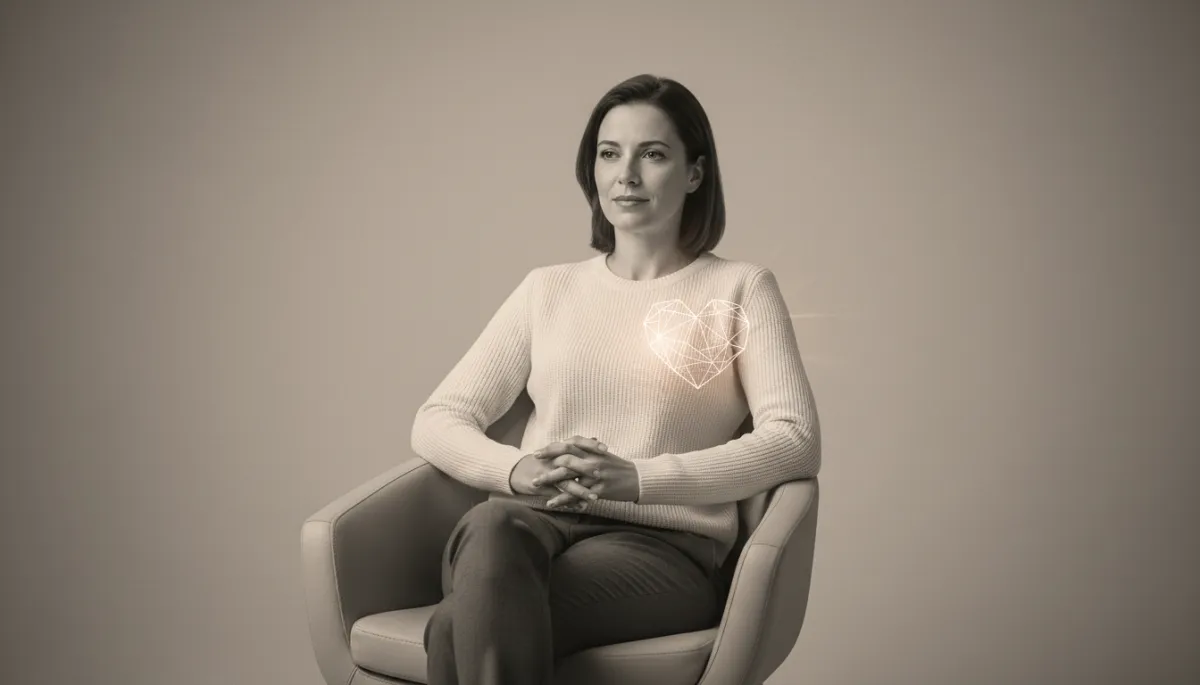
Supporting the body’s state can gently influence how the mind experiences stress.
This is why body-based approaches such as slow breathwork, heart focused breathing, and mindful movement can play a helpful role in nervous system regulation. They do not erase stressful thoughts, but they can shift the body out of a constant high-alert mode and support more balanced self regulation.
6. Why It Can Be Difficult to Switch Off
Many people know that constant worry is unhelpful, yet find it incredibly hard to stop. This is not simply a matter of willpower or “thinking positively.” When the stress response is active, the brain naturally pays more attention to potential problems. It is like a program set to scan for errors, running in the background and consuming resources.
You might notice patterns such as:
Replaying conversations and imagining what you “should have” said.
Planning for every possible outcome, just in case.
Mentally checking for what might go wrong next.
This style of thinking can be understandable, especially if you have experienced stress or uncertainty in the past. However, it can keep the nervous system activated and make it harder to feel present, restful, and connected to what is happening right now.
7. A Simple Practice for Supporting Nervous System Regulation
When you notice your thoughts becoming overwhelming, it can be helpful to create a short, gentle pause. The following exercise is a simple way to support nervous system regulation using breath and awareness. It can be practised almost anywhere and does not require special equipment.
Bring your attention to the centre of your chest. You may like to place a hand there if it feels comfortable.
Breathe in gently for around five seconds.
Breathe out gently for around five seconds. Keep the breath comfortable rather than forced.
Allow your shoulders, jaw, and other muscles to soften as much as feels natural.
Gently return your attention to the present moment – your breathing, the chair beneath you, sounds in the room.
Continue for two to five minutes, or for as long as feels supportive.
💡 Important: The goal is not to stop stressful thoughts completely. Instead, this practice can create a pause and support a more regulated response when those thoughts appear.
8. Changing Your Response to Stress
You cannot always control which thoughts arise. A memory may surface unexpectedly; a worry about tomorrow may appear without invitation. What you can gradually influence is how you respond when you notice those thoughts and the sensations that follow.
Developing awareness of early signs – such as a faster heartbeat, shallower breathing, or a sense of being “on edge” – can help you respond sooner. That response might include slowing your breathing, softening your posture, taking a short break, or using a simple grounding practice. Over time, this can support more flexible emotional regulation and reduce the sense of being controlled by overthinking.
9. Other Ways to Support Brain Health
Breathing practices are just one part of a broader approach to supporting brain health and the stress response. Everyday foundations can make a meaningful difference over time:
Regular physical activity suited to your body and circumstances.
Consistent, good-quality sleep where possible.
Time outdoors and exposure to natural light during the day.
Social connection and supportive relationships.
For some people, additional approaches may also be helpful. These can include:
Mindfulness – gently noticing thoughts, sensations, and emotions without judgement.
Heart-focused breathing – combining slow breathing with attention at the heart area to support coherence in the nervous system.
HRV training – using heart rate variability feedback to learn how your body responds to stress and practice more balanced breathing patterns.
Neurofeedback and personalised neurotherapy – approaches that use information about brain activity to support awareness and explore strategies that may assist with self regulation and resilience.
These options do not cure anxiety, stress, or mental health conditions, and they do not offer guaranteed results. However, as part of a broader, evidence informed plan, they may support individuals in understanding their own patterns and building practical skills for managing the stress response.
10. How Neurotherapy Australia Can Help
At Neurotherapy Australia, the focus is on understanding each person’s unique brain and nervous system, rather than applying a one-size-fits-all solution. The team uses an evidence informed approach that may include neurotherapy, neurofeedback, HRV training, brain mapping, and education about the stress response and self regulation.
By exploring how your brain and body respond to perceived threats, you can begin to develop strategies that support regulation, resilience, and long-term brain health. Some people find that combining practices like breathwork and mindfulness with structured feedback-based tools offers a clearer picture of their patterns and progress over time.
Neurotherapy Australia does not claim to cure anxiety, stress, or mental health conditions. Instead, the aim is to provide informed support, practical tools, and personalised guidance that may assist individuals in working with their nervous system more effectively.
11. Key Takeaways
Stress can begin with thoughts, memories, or worries, even when there is no immediate physical danger.
The brain responds to perceived threats by activating the fight or flight response, which affects the body.
The brain-body connection means that changing your physical state can influence how you experience stress.
Slow, comfortable breathing and other body-based practices can support nervous system regulation.
Neurotherapy Australia offers evidence informed approaches that may help individuals understand and support their own stress response.
You cannot prevent every stressful thought from appearing. The mind will remember, imagine, and plan – that is part of being human. What you can do is gradually change your relationship with those thoughts and with the sensations that come with them. When you notice your mind creating a threat, you have the option to pause, breathe, and bring some of your attention back to the body and the present moment.
Over time, practices such as heart-focused breathing, mindfulness, HRV training, and neurofeedback may help you build greater awareness and flexibility in your stress response. Combined with supportive lifestyle habits and, where appropriate, professional guidance, these tools can form part of a thoughtful, compassionate approach to looking after your nervous system and your brain health.
If you recognise yourself in the patterns described here – constant “what if?” thoughts, difficulty switching off, or a body that feels permanently on alert – you are not alone, and it is understandable to seek support. You may like to begin with the simple breathing exercise in this article and notice how your body responds over time.
To learn more about nervous system regulation, neurofeedback, HRV training, and personalised neurotherapy, you are welcome to contact Neurotherapy Australia. The team can discuss your goals, share information about evidence informed options, and help you decide whether their services may be a suitable part of your broader support plan.