Brain Health: Stress & Nervous System Regulation
Brain Health, Stress, Nervous System Regulation, Neurotherapy Gold Coast
Your Brain Is Constantly Adapting: The Connection Between Brain Health, Stress and Nervous-System Regulation
Your brain is doing something remarkable every day: processing experiences, adjusting to demands and helping you respond to the world around you. Understanding how this continuous adaptation works can help you take a more informed, premium approach to brain health, stress and nervous system regulation.
Meta description: Explore how brain health, stress and nervous system regulation interact, and how qEEG brain mapping may inform personalised care.
Your Brain Is Always at Work
Even as you read this sentence, your brain is performing an intricate series of tasks. It is receiving visual information, interpreting language, linking these ideas to your memories and deciding how relevant they are to you. At the same time, it is coordinating breathing, posture, heart rate and countless other automatic functions through the broader brain and nervous system.
Brain health is not simply about how much information you can store. It is about how effectively your brain processes incoming signals, updates its internal “models” of the world and supports your ability to respond to changing situations. This continuous stream of activity is what allows you to adapt to new roles at work, shift between tasks, recover after demanding periods and navigate everyday emotional ups and downs.
When daily demands start to outweigh your opportunities to rest and recover, this ongoing adaptation can feel strained. You might notice changes in focus, sleep, stress tolerance or emotional balance. Understanding why this happens begins with the way your brain is built to adapt.
Your Brain Is Built to Adapt: A Clear Look at Neuroplasticity
One of the most important ideas in modern neuroscience is neuroplasticity. In simple terms, neuroplasticity is the brain’s ability to change how its cells connect and communicate in response to experience. Rather than being wired once and left unchanged, your brain continually fine‑tunes its networks based on what you repeatedly do, think and feel.
You can see neuroplasticity in action in everyday life:
When you learn a new skill at work, the first few attempts may feel slow and effortful. With repetition, the task becomes smoother. Your brain has strengthened certain pathways so you can perform the task with less conscious effort.
When you build a morning routine that includes movement, a regular breakfast and a defined time to start the day, your brain learns this pattern. Over time, it may become easier to follow the routine without having to negotiate each step.
When you practise a new response to a challenging situation—such as pausing before replying to a difficult email—your brain can gradually learn that this slower, more deliberate approach is available, even when you feel pressured.
Neuroplasticity is not a magic switch that instantly reshapes every pattern. It is a gradual, experience‑dependent process. It does not mean that every difficulty can be “retrained” away, nor does it guarantee specific outcomes. Instead, it highlights a realistic but hopeful truth: your brain remains responsive to what you repeatedly do, pay attention to and prioritise, across the lifespan.
Stress and Brain Health: What Happens When Demands Keep Arriving?
Stress is often spoken about as if it is purely negative, but from a biological perspective it is a normal and useful response. When you face a demand—an urgent deadline, a complex decision, a sudden noise—your brain and body coordinate a stress response designed to help you act. Hormones and nervous‑system signals increase alertness, sharpen certain aspects of attention and prepare muscles and organs for action.
In the short term, this can support brain function. You might notice that you are more focused before an important presentation or more energised when you need to solve a problem quickly. Stress and brain health are closely linked: the same systems that help you rise to a challenge also need time and space to settle afterward.
Challenges can arise when stress becomes frequent and recovery time is limited. Over time, you may notice:
Difficulty concentrating or switching off from work‑related thoughts.
Feeling mentally overloaded, even with tasks that previously felt manageable.
Changes in sleep, such as taking longer to fall asleep or waking in the night with a busy mind.
Emotional shifts, including feeling more irritable, flat or reactive than usual.
These experiences can have many possible causes, and they do not automatically mean that stress has “damaged” your brain. People vary widely in how they respond to ongoing stress, based on genetics, history, support, health and current circumstances. However, noticing these patterns can be a useful prompt to consider your overall balance between activation and recovery, and to reflect on how your daily habits might be supporting—or stretching—your brain health.
📌 Key Takeaway: Stress itself is not the enemy. The combination of frequent stress and limited recovery can influence how your brain and nervous system function day to day.
Your Brain and Nervous System Work Together
Your brain is the central hub of the brain and nervous system. It communicates with the spinal cord and a vast network of nerves that reach every organ, muscle and sense. Much of this communication is handled by the autonomic nervous system, which helps regulate heart rate, breathing patterns, digestion and other automatic processes as situations change.
A useful way to think about this system is as a dynamic regulator, rather than a simple “on/off” switch. At times, you need a higher level of activation: preparing for a meeting, navigating traffic, engaging in focused work or exercise. At other times, you need to shift toward recovery: winding down after the day, digesting a meal, preparing for sleep. Healthy nervous system regulation involves moving between these modes when appropriate, not remaining in one fixed state.
Everyday examples can make this clearer:
Before a significant event, you might feel alert, energised and slightly tense. This reflects an adaptive increase in activation to help you perform.
After the event, you may notice a gradual settling—your breathing slows, your thoughts feel less urgent and your body feels more at ease. This shift toward recovery is also part of healthy regulation.
Rather than labelling certain states as “good” and others as “bad”, it can be more accurate—and more compassionate—to ask whether your brain and nervous system are able to move flexibly between activation and recovery in ways that fit your life. Brain health is supported when this flexibility is intact and you have habits that create space for both effort and restoration.
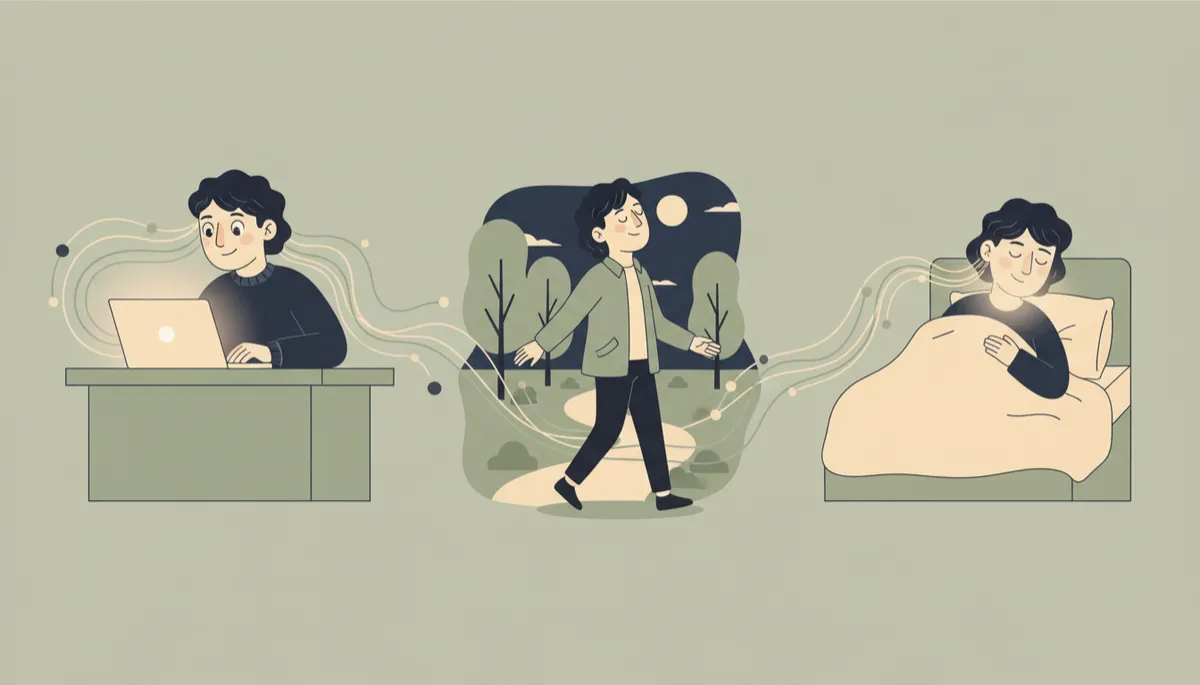
Daily shifts between effort and recovery give the brain repeated chances to regulate and reset.
Everyday Habits That Support Brain Health
You cannot control every market movement in your day—or every stressor in your life—but you can influence the conditions your brain and nervous system operate within. Certain everyday habits are repeatedly linked with healthier patterns of brain function and nervous system regulation over time. They do not guarantee specific mental‑health outcomes, yet they can form a strong foundation for wellbeing.
Consistent, Adequate Sleep
Sleep is one of the most powerful supports for brain health. During sleep, the brain consolidates learning, processes aspects of emotional experience and performs essential maintenance tasks. Irregular or insufficient sleep can influence attention, decision‑making, stress tolerance and mood the following day.
Aim for a fairly consistent sleep and wake time, even on weekends, where possible.
Create a wind‑down routine that signals to your brain that sleep is approaching—dimmer lights, reduced screen time and calming activities can help for some people.
If sleep difficulties are persistent or significantly affect your life, it is important to seek advice from a qualified healthcare professional, as there may be underlying medical, psychological or lifestyle factors to address.
Regular Physical Activity
Movement supports circulation, cardiovascular health and mood, and is associated with positive effects on brain function. You do not need to adopt an extreme exercise program to benefit. Walking, swimming, cycling, dancing or other enjoyable activities can all contribute to brain health when tailored to your abilities and circumstances.
Learning and Mental Engagement
Because neuroplasticity is driven by experience, ongoing learning can help keep certain brain networks engaged. This does not have to mean formal study. Reading, learning a language, playing an instrument, exploring a new hobby or refining an existing skill can all provide meaningful cognitive stimulation.
Meaningful Social Connection
Humans are social beings, and social connection is closely linked with emotional wellbeing. Spending time with trusted people, sharing experiences and feeling understood can influence how you process stress and recover from challenges. Connection can be quiet and simple; it does not need to be constant or highly social to be meaningful.
Breaks, Recovery and Practical Stress Management
Rest is more than the absence of work. Intentionally stepping away from demands—through short breaks, time outdoors, or simply changing your environment—can create opportunities for your nervous system to shift toward recovery. Practical stress management might include setting clearer boundaries around work hours, scheduling moments of pause between commitments or simplifying parts of your day where possible.
💡 Pro Tip: Focus on sustainable adjustments rather than perfect routines. Small, realistic changes are more likely to support brain health over time than short‑lived, demanding plans.
Why Regulation Is More Than Relaxation
The phrase “regulate your nervous system” is often used in wellness conversations, but it can be misunderstood. Nervous system regulation is not about staying calm at all times or eliminating stress from your life. Instead, it refers to your capacity to meet demands with an appropriate level of activation and then return, when possible, toward a more settled state.
In practice, this might look like being able to feel alert for a challenging conversation, experience natural nervousness, and then gradually settle afterward—rather than remaining in a heightened state long after the event has passed. Regulation is a dynamic process, influenced by biology, history, context and current resources, rather than a button you can press for an instant reset.
Some people find it helpful to experiment with gentle strategies that can support this process:
Comfortable breathing: Slowing your breath slightly and breathing into a comfortable range—not forced, not overly deep—can help create a pause during stressful moments. If you feel light‑headed or uncomfortable, it is important to stop and return to your natural breathing pattern.
Grounding through the senses: Noticing what you can see, hear, feel or smell in your immediate environment can gently shift your attention away from racing thoughts and back toward the present moment.
Gentle movement: Standing up, stretching or taking a brief walk can help your body transition between states, especially if you have been sitting and focusing intensely for long periods.
Reducing unnecessary stimulation: When possible, stepping away from multiple notifications, loud noise or competing tasks—even for a few minutes—can give your nervous system a clearer signal that it is safe to settle.
These approaches are not instant solutions, and they may not work the same way for everyone. If stress, anxiety, mood changes or other concerns are frequent or significantly affecting your life, it is important to seek support from an appropriately qualified healthcare or mental‑health professional.
How Can You Better Understand Your Brain?
General information about brain health can be valuable, but many people are also curious about their own individual patterns of brain activity. One way to explore this is through qEEG brain mapping, used within a broader brain and nervous system assessment.
An electroencephalogram (EEG) records electrical activity from the brain using sensors placed on the scalp. Quantitative EEG, or qEEG, involves applying statistical and computational analysis to this recording. Instead of simply viewing the raw waves, qEEG helps identify patterns—such as how different frequency bands are distributed across regions of the scalp during specific conditions, like resting quietly with eyes closed or open.
When interpreted carefully and in context, qEEG brain mapping may provide an additional perspective on brain function. For example, it can contribute to discussions about how alert, drowsy or variable certain patterns appear during the recording, or how synchronised activity is across different regions. It is one piece of information among many, and its meaning depends heavily on the individual’s history, current circumstances and other relevant data.
📌 Key Takeaway: qEEG brain mapping does not label a brain as “good” or “bad”. Instead, it offers structured information about electrical patterns that can inform a broader, personalised conversation about brain function.
The Role of a Brain & Nervous System Assessment at Neurotherapy Australia
At Neurotherapy Australia, a Brain & Nervous System Assessment is designed to bring together multiple sources of information in a considered, person‑centred way. Rather than focusing on a single test, the assessment aims to build a more complete picture of how your brain and nervous system may be functioning within the context of your life.
Depending on your circumstances, the assessment may include:
qEEG brain mapping to record and analyse patterns of electrical brain activity during defined resting conditions.
Heart rate variability (HRV) measurement to provide information about variation in the time between heartbeats, which can reflect aspects of autonomic nervous system activity.
Relevant wellbeing questionnaires to understand your experiences, patterns of stress, sleep, mood, focus and other aspects of daily functioning.
Personalised discussion and education to place the information in context, answer questions and explore practical next steps that align with your goals and circumstances.
By considering these components together, the Brain & Nervous System Assessment can help you move from general ideas about brain health toward a more personalised understanding of your own patterns. This does not replace medical or psychological assessment where needed, but it may complement existing care and support more informed conversations about stress, sleep, focus and nervous system regulation.
What Brain Mapping Cannot Tell You
It is important to be clear about the limits of qEEG brain mapping. A brain map is not a standalone diagnostic test. On its own, it does not diagnose ADHD, anxiety, depression, trauma, autism or neurological diseases. It does not explain every symptom, nor does it predict with certainty how you will respond to any particular strategy or therapy.
Brain activity is influenced by many factors, including sleep, alertness, recent medication, caffeine intake, current stress levels and the specific conditions under which the recording is made. For this reason, qEEG findings need to be interpreted cautiously and in combination with your history, current concerns, clinical assessment and, where relevant, input from other health professionals.
⚠️ Important: If you have ongoing symptoms or concerns about your mental or physical health, it is essential to consult an appropriately qualified medical or psychological professional. A brain and nervous system assessment can be one part of a broader, collaborative approach to care.
Take a More Informed Approach to Brain Health
Your brain is constantly adapting—processing information, updating its responses and working with the rest of your nervous system to navigate each day. Stress, sleep, learning, physical activity, connection and recovery all influence how this system feels and functions over time. While you cannot control every variable, you can choose to become more informed about your own patterns and to cultivate habits that support your brain health in realistic, sustainable ways.
For some people, exploring a personalised brain and nervous system assessment offers a valuable next step. At Neurotherapy Australia on the Gold Coast, qEEG brain mapping, HRV measurement, questionnaires and individualised discussion come together to provide a structured, evidence‑informed view of your brain and nervous system regulation, without over‑promising or simplifying complex experiences.
If you are curious about how your own brain patterns relate to stress, focus, sleep or recovery, you may wish to learn more about whether this type of assessment aligns with your goals and existing care. Understanding your starting point can make it easier to choose practical next steps, whether that involves lifestyle adjustments, further medical or psychological support, or exploring neurotherapy options in a measured, evidence‑aware way.
Neurotherapy Australia
38/207 Currumburra Road, Ashmore QLD 4214, Gold Coast, Australia
To explore how a Brain & Nervous System Assessment might support a more informed approach to your brain health, you are warmly invited to contact Neurotherapy Australia and discuss your individual situation. Your brain continues to adapt throughout life; understanding that process is a powerful starting point for thoughtful, personalised care.
Ever wonder what's going on inside your brain? Book a Brain and Nervous System Assessment today! Click here to find out more →

