Brain & Nervous System Assessment Gold Coast
Brain Health, Nervous System Regulation, Neurotherapy Gold Coast
Brain & Nervous System Assessment: A Closer Look at How You Function
Have you ever wondered why you can feel “off” without being able to explain exactly why? You might notice your focus slipping, your sleep changing or your stress creeping up, yet routine check-ups tell you that everything looks “fine”. For many people on the Gold Coast, that gap between how you feel and what you can measure is where curiosity about a brain and nervous system assessment begins.
You may recognise some of these experiences:
Difficulty concentrating, especially when tasks demand sustained attention
Feeling mentally overloaded or “wired but tired” by the end of the day
Trouble switching off, even when you finally get a chance to rest
Poor sleep quality or difficulty settling at night and waking refreshed
Feeling stressed or easily overwhelmed by everyday demands or changes in routine
Changes in energy, from flat and sluggish to restless and overactivated
Difficulty recovering after busy periods, illness or intense training
These patterns can have many possible influences. Sleep habits, work stress, past experiences, physical health, movement, nutrition, relationships and environment all play a role. Sometimes, taking a closer look at how your brain and nervous system are functioning can provide an extra layer of context. That is where a brain and nervous system assessment may be helpful.
What Is a Brain & Nervous System Assessment?
A Brain & Nervous System Assessment is designed to gather personalised information about how aspects of your brain and autonomic nervous system are functioning right now. Rather than relying on a single test or one number, it can bring together several sources of information to build a richer picture of your individual patterns.
At Neurotherapy Australia on the Gold Coast, this may include measures of brain activity, indicators of nervous-system regulation, structured wellbeing questionnaires and a detailed conversation about your experiences, history and goals. Each piece offers a different angle on how you function in daily life. The aim is not to label you, but to understand you more clearly.
The goal is understanding, not labelling. A brain and nervous system assessment is about exploring patterns, not diagnosing conditions.
For many adults, this kind of brain health assessment can feel like finally turning the lights on in a dimly lit room. You may recognise long-standing tendencies, see how stress shows up in your system, or notice how your recovery patterns match (or mismatch) your daily demands.
Why Look at the Brain and Nervous System Together?
Your brain does not work in isolation. It is part of a wider network that includes your autonomic nervous system – the part that helps regulate heart rate, breathing, digestion, arousal and recovery without you having to think about it. Together, your brain and nervous system shape how you respond to the world around you and within you.
Attention: Brain networks help you focus, shift and sustain attention. The nervous system supports the level of alertness needed for the task at hand.
Arousal: Your level of activation can range from calm and restful to highly energised. Both under‑arousal and over‑arousal can affect thinking, mood and performance.
Stress responses: When you face a challenge, your nervous system helps you mobilise energy. When the challenge passes, it also helps you return toward balance and recovery.
Sleep and recovery: Transitions between wakefulness, deep sleep and dream sleep involve coordinated brain activity and shifts in autonomic tone. These patterns influence how restored you feel the next day.
Emotional regulation: Brain regions involved in emotion, thinking and body awareness work together with the nervous system to support how you experience and respond to feelings.
Physiological adaptation: Over time, your nervous system adapts to your environment, workload, habits and history, which can shape your baseline patterns of activation and recovery.
No single brain or nervous-system pattern explains every symptom. Human wellbeing is complex and influenced by biological, psychological, behavioural and environmental factors. However, looking at the brain and nervous system together can provide meaningful clues about how your system is currently operating and where small, practical changes might be most useful.
What Can the Assessment Look At?
A brain and nervous system assessment at Neurotherapy Australia can draw on several components. Each offers a different lens on your brain health and nervous system regulation, and together they can help build a more integrated understanding of how you function day to day on the Gold Coast.
qEEG Brain Mapping
Quantitative EEG, or qEEG brain mapping, is a way of recording and analysing electrical activity from the surface of the scalp. During an EEG, small sensors are placed on the head to pick up the tiny electrical signals produced by groups of brain cells as they communicate. These signals are then processed to look at patterns in different frequency bands and regions of the brain.
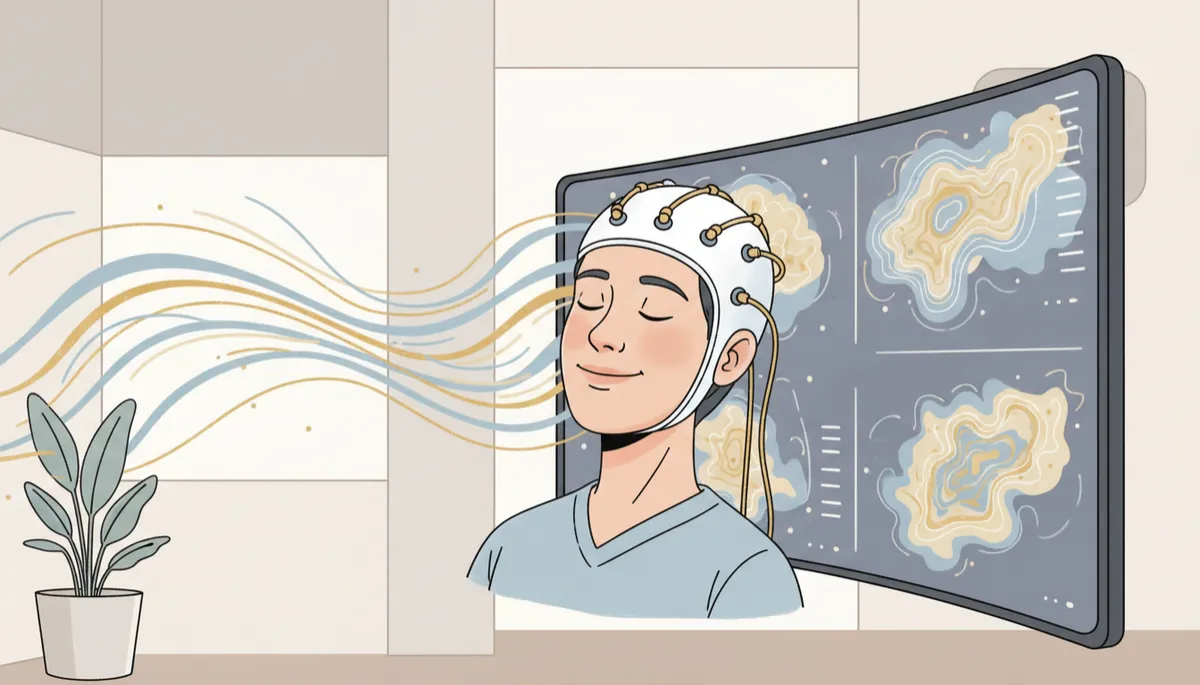
qEEG brain mapping can highlight patterns in brain activity linked to focus, arousal and recovery.
In a clinical neurotherapy setting, qEEG can provide information about how different areas of your brain are communicating, how active they are at rest and how they respond to simple tasks. This can offer insight into patterns related to attention, mental effort, over‑ or under‑activation and how easily your brain shifts states. qEEG brain mapping does not diagnose mental health conditions, ADHD, trauma, depression, anxiety or neurological disease. Instead, it acts as a functional map that can inform individualised brain training conversations and strategies.
Heart Rate Variability
Heart Rate Variability (HRV) refers to the natural variation in time between each heartbeat. Rather than beating like a metronome, a healthy heart speeds up and slows down slightly from moment to moment in response to breathing, activity and internal signals. This subtle rhythm is influenced by your autonomic nervous system and can provide information about how your body is adapting to demands and recovering from them.
An HRV assessment can explore how your system responds during rest, breathing exercises or mild challenges. Factors such as stress, sleep quality, physical activity, recovery, emotional state and even time of day can influence HRV. There is no single HRV number that is ideal for everyone. Instead, patterns over time, and how your HRV changes with different practices, can offer insight into your individual nervous-system regulation and heart–brain communication.
Wellbeing Questionnaires
Structured wellbeing questionnaires add an important subjective layer to a nervous system assessment. They invite you to reflect on your experiences of stress, mood, sleep, attention, energy, performance and day‑to‑day functioning. They can also help clarify your main concerns, your goals and the areas of life that feel most affected right now.
Questionnaires are not diagnostic on their own. Instead, they help ensure that any brain or physiological data is interpreted in the context of your lived experience. For example, your answers may highlight that late‑night work, shift patterns or long commutes are major contributors to your sleep and energy challenges. This information can guide more realistic and compassionate next steps.
Personalised Discussion
Numbers and brain maps only become meaningful when they are connected to a real person. A personalised discussion is a central part of Neurotherapy Australia’s brain and nervous system assessment process. This is where you and your clinician sit together to explore what the findings may mean for you, in plain language, with space for questions and reflection.
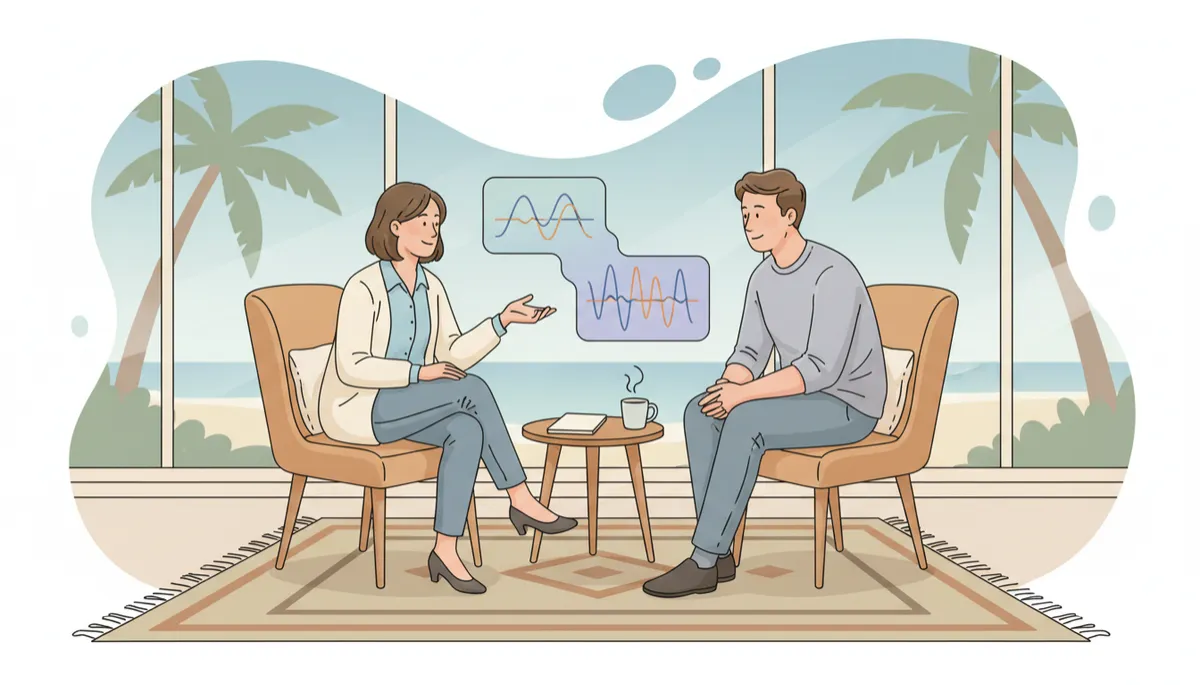
Personalised discussions help connect data with your lived experience and goals.
Together, you might look at how your brain activity relates to your focus, how your HRV patterns align with your sense of stress and recovery, or how your questionnaires reflect your current lifestyle. The emphasis is on curiosity, collaboration and practical relevance, not judgement. For many people, this conversation is where scattered pieces of information begin to form a clearer narrative about their brain health and nervous-system regulation.
What Can You Learn From an Assessment?
A brain and nervous system assessment is not about quick fixes. It is about gaining insight that can support more informed choices over time. Depending on your situation, an assessment may help you:
Better understand individual patterns – such as tendencies toward over‑activation, difficulty winding down or challenges sustaining attention under certain conditions.
Identify areas worth exploring further with your GP, psychologist, psychiatrist or other healthcare professionals, where appropriate.
Connect physiological information with everyday experiences – for example, linking periods of low HRV with weeks where sleep, workload or emotional demands have been particularly intense.
Establish a baseline for your current brain activity and nervous-system patterns, which can be useful if you later make lifestyle changes or engage in brain or nervous-system training.
Have more informed conversations with practitioners by bringing concrete, personalised data into discussions about stress, sleep, focus or recovery.
Consider practical strategies for supporting wellbeing, such as pacing, breathing practices, sleep routines, movement, or targeted brain and nervous-system training options where appropriate.
Track changes over time if you choose to repeat aspects of the assessment after a period of focused change or training.
A single assessment cannot tell you everything about your health, but it can provide a structured starting point for more personalised, evidence‑informed next steps.
What the Assessment Does Not Do
Responsible brain health assessment also means being clear about what it does not do. This protects you as a client and maintains good clinical standards. Neurotherapy Australia’s Brain & Nervous System Assessment:
Is not a medical diagnosis and does not replace medical or psychological assessment.
Does not diagnose neurological conditions such as epilepsy, dementia or brain injury.
Does not diagnose mental health conditions such as depression, anxiety, PTSD or ADHD.
Does not provide a single explanation for every symptom you experience.
Does not guarantee specific outcomes from any training or strategy you may choose afterwards.
The information gathered is one part of a broader picture. It should be considered alongside your medical history, psychological support, lifestyle and other relevant care. If an assessment raises questions that sit outside the scope of neurotherapy, you may be encouraged to discuss them with your GP or another qualified professional.
Who Might Find an Assessment Useful?
A brain and nervous system assessment can be relevant for a wide range of adults. You do not need a diagnosis, and you do not need to be in crisis. Many people who attend Neurotherapy Australia on the Gold Coast are simply curious about how their brain and nervous system are functioning and whether tailored training or lifestyle shifts might support their wellbeing or performance.
People who notice ongoing stress and want to understand their stress–recovery patterns more clearly.
Adults who struggle with focus, concentration or mental fatigue during work or study.
Those experiencing unsettled sleep, difficulty switching off at night or waking unrefreshed, without a clear medical cause already identified.
Individuals who feel emotionally “up and down” and are curious about how their nervous system may be contributing to this experience of emotional regulation.
People interested in brain performance, brain training or neurotherapy who would like a structured starting point before beginning any training program.
Adults focused on general wellbeing who want to understand their own nervous-system regulation in more depth, especially in the context of busy Gold Coast lifestyles.
Experiencing any of these patterns does not mean you have a disorder. It simply means your system is responding in a particular way, and you may wish to explore that response more carefully.
From Information to Practical Next Steps
Information becomes truly valuable when it leads to practical, appropriate action. After your brain and nervous system assessment, the focus shifts from “What did we see?” to “What might be helpful now?” For some people, this may involve small, realistic changes. For others, it may open the door to more structured training or further healthcare support.
Education: Understanding basic brain and nervous-system concepts – such as arousal, recovery and heart–brain communication – can make your experiences feel more predictable and manageable.
Lifestyle strategies: Adjustments to sleep routines, screen time, movement, breathing practices, pacing and recovery can be explored in light of your individual patterns, not generic advice alone.
Nervous-system training: For some people, targeted exercises that support regulation – such as HRV‑based breathing or other nervous-system training approaches – may be discussed as options to explore.
Personalised brain training: Where appropriate, qEEG‑informed brain training (neurofeedback and related approaches) may be considered as one part of a broader wellbeing plan. These approaches aim to train brain patterns, not to treat or cure specific diagnoses.
Tracking relevant patterns: You may choose to monitor sleep, stress, HRV or other markers over time to see how your system responds to changes you make.
Referral or collaboration: In some cases, sharing assessment findings with your GP, psychologist, psychiatrist or allied health team can support more joined‑up care.
None of these steps are mandatory, and none are presented as guaranteed solutions. The intention is to offer a menu of options that align with your values, capacity and goals, so you can move from guessing toward more informed experimentation.
Why Personalisation Matters
Most of us have tried generic advice at some point: “Go to bed earlier”, “Do more exercise”, “Stress less”. While these ideas can be helpful in principle, they often fail to account for the realities of individual lives on the Gold Coast – shift work, family responsibilities, health history, training loads and personal preferences, to name just a few.
People differ in their sleep patterns and how sensitive they are to changes in routine or evening stimulation.
Work, caregiving and life events shape each person’s stress exposure and recovery opportunities.
Lifestyle factors such as movement, nutrition and screen use interact with your baseline physiology in unique ways.
Your baseline physiology – including brain activity and autonomic patterns – may mean that certain strategies suit you better than others.
Different roles create different cognitive demands, from high‑level decision‑making to sustained concentration or creative output.
Recovery needs vary depending on age, health, training load and personal history.
A personalised brain and nervous system assessment can provide a grounded starting point for tailoring strategies to your specific context. Instead of wondering whether a trend you read about online will work for you, you can explore options that make sense in light of your own patterns and priorities.
The Neurotherapy Australia Approach
Neurotherapy Australia is a dedicated brain health and neurotherapy clinic located at 38/207 Currumburra Road, Ashmore QLD 4214, Gold Coast, Australia. The clinic’s approach brings together assessment, education and practical strategies to support adults who are curious about their brain and nervous-system function.
A typical Brain & Nervous System Assessment at Neurotherapy Australia may include:
A structured brain and nervous system assessment that integrates multiple sources of information rather than relying on a single test.
qEEG brain mapping to explore patterns in electrical brain activity related to states such as focus, rest and activation.
HRV measurement to gain insight into autonomic nervous-system responses and adaptation over short assessment periods.
Relevant wellbeing questionnaires to capture your experiences of stress, sleep, focus, mood, energy and functioning in daily life.
A personalised discussion to walk through your results, answer questions and link findings to your goals and context on the Gold Coast.
Where appropriate, the clinic can also offer:
Brain training options, such as neurofeedback and related approaches, informed by your qEEG and goals.
Nervous-system training options that focus on supporting regulation, awareness and recovery, sometimes incorporating HRV feedback.

Neurotherapy Australia combines assessment, education and training to support informed next steps.
None of these services are positioned as cures, and they do not replace the role of your GP, psychologist, psychiatrist or other health professionals. Instead, they are offered as additional tools that can support a more personalised, data‑informed approach to brain health and nervous-system regulation.
Start With Understanding
You do not need to guess your way forward. If you have been feeling “off” – struggling with stress, focus, sleep, energy, emotional regulation or recovery – sometimes the first step is simply understanding your own patterns more clearly. A thoughtful brain and nervous system assessment can help bring what is happening beneath the surface into view, without judgement and without rushing to labels.
If you are on the Gold Coast and curious about how your brain and nervous system are functioning, you can learn more about Neurotherapy Australia’s Brain & Nervous System Assessment, explore brain training and nervous-system training options, or contact the clinic to discuss whether an assessment may be a good fit for your goals. Sometimes, understanding is the most powerful place to begin.
Ever wonder what's going on inside your brain? Book a Brain and Nervous System Assessment today! Click here to find out more →

