Brain & Nervous System: Understanding Their Connection
Brain and Nervous System, Brain Health, Nervous System Health, Brain Mapping Gold Coast
Brain & Nervous System: How They Work Together
Discover how your brain and nervous system work as a team, why this connection matters for everyday life, and how understanding your own patterns can support your wellbeing.
SEO Title, Meta Description and URL Slug
SEO Title: Brain and Nervous System: How They Work Together for Everyday Wellbeing
Meta Description (under 155 characters): Learn how your brain and nervous system work together and why this connection matters for stress, sleep, focus and everyday wellbeing.
Suggested URL Slug: brain-and-nervous-system-how-they-work-together
Introduction: Your Brain and Nervous System as a Team
Your brain and nervous system are working together every moment of the day, even when you are not thinking about them. They help you notice what is happening around you, understand what is happening inside your body and choose how to respond. This brain nervous system connection can influence how you handle stress, how clearly you can focus, how well you sleep, how you manage emotions, and how your body recovers from everyday demands.
Having a basic understanding of this connection does not mean you are “fixing” anything on your own. Instead, it can give you a different, more informed way to look at how you feel and function. From there, you can decide what kind of support, habits or professional guidance might be most helpful for you and your nervous system health.
1. What Is the Nervous System? Your Body’s Communication Network
The nervous system is your body’s communication network. It is made up of:
the brain
the spinal cord (the main “highway” of nerves in your back)
the nerves that branch out to every part of your body
These parts are constantly sending and receiving signals. Tiny electrical messages travel along nerves, carrying information about things like touch, temperature, movement, and what is happening inside your body. The nervous system then passes this information to the brain, which helps decide what to do next. This is a key part of both brain function and nervous system health.
Everyday Examples of the Nervous System at Work
You touch something hot, pull your hand away quickly, and then feel the heat and pain. Your nerves and spinal cord carried that message in an instant.
You hear your name in a noisy room and suddenly turn your head. Your nervous system picked out that important sound and alerted your brain.
Your heart rate changes when you walk up stairs, feel worried, or relax on the couch. Signals between your body and brain help adjust these automatic responses.
This constant flow of information helps your body stay balanced and ready to respond to whatever is happening next.
2. The Brain: Your Control Centre
The brain is often described as the control centre of the body. It works closely with the nervous system to:
coordinate movement (from walking to fine hand movements)
support attention and focus so you can stay on a task
help manage emotions and reactions to daily events
create and store memories
support decision-making, big and small
run many automatic processes, such as breathing and heart rate, without you needing to think about them
Your brain is always receiving new information from your senses and from inside your body. It uses this information to keep adjusting what your body is doing. This means the brain and nervous system are not separate systems working alone. They are part of one connected network that shapes your daily experience and overall brain health.
3. How the Brain and Nervous System Communicate
The brain and nervous system communicate through fast electrical and chemical signals. You can think of it as a two-way conversation:
Step 1: Information Travels to the Brain
Nerves in your skin, muscles and organs pick up signals such as pressure, movement, temperature, and internal changes like heart rate or digestion. These signals travel through the spinal cord up to the brain. This helps your brain understand what is happening both outside and inside your body.
Step 2: The Brain Makes Sense of the Signals
The brain compares this new information with past experiences, memories and your current state. It then helps decide how your body should respond. This may happen quickly and automatically, or more slowly with conscious thought, depending on the situation.
Step 3: Signals Travel Back Through the Nervous System
Once the brain has processed the information, it sends signals back through the nervous system to the rest of the body. These signals can:
tighten or relax certain muscles
change your breathing rate or heart rate
adjust how alert or sleepy you feel
shift your attention towards or away from certain things
This back-and-forth communication is happening all the time. It is a key part of both brain function and nervous system regulation and helps you move between states of focus, action, rest and recovery.
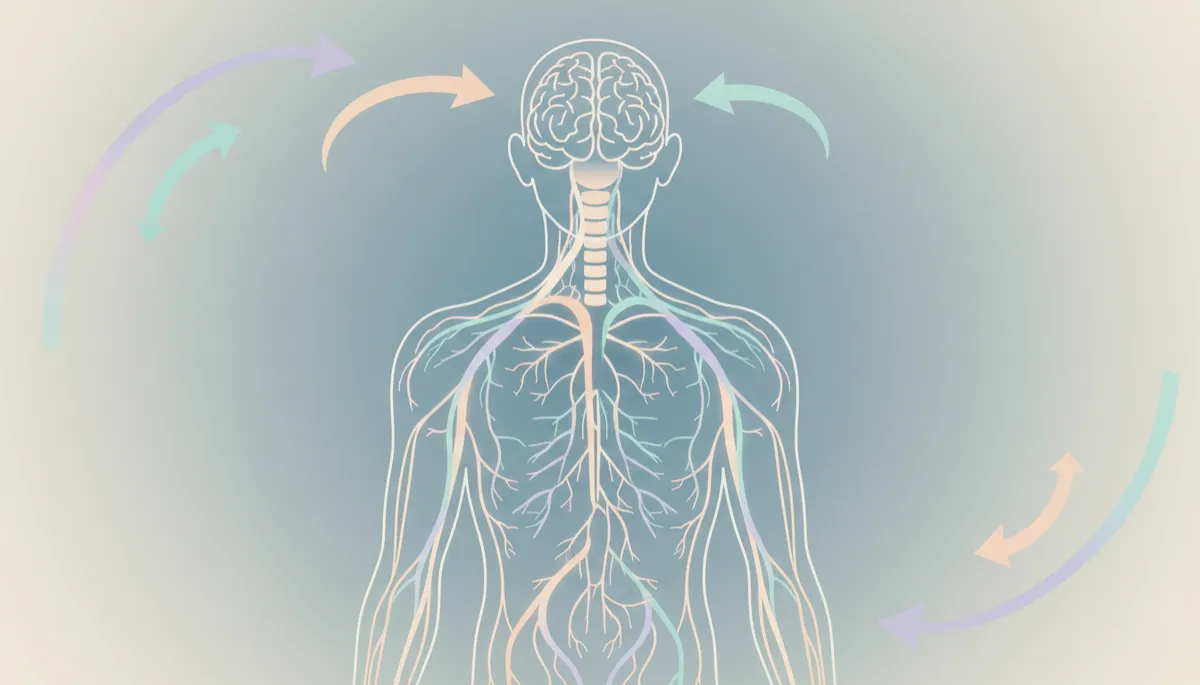
Two-way signalling between brain and body shapes how you feel and respond each day.
4. Why the Brain and Nervous System Connection Matters
The brain nervous system connection is not just an interesting science topic. It has real effects on everyday life. Because the brain and nervous system are so closely linked, changes in one can influence the other. This can show up in areas such as:
how quickly you react to stress or pressure
how easily you can switch off and rest
how steady or changeable your mood feels across the day
Understanding this relationship can help you look beyond single symptoms and consider the bigger picture of your brain health and nervous system health. It can also encourage a more compassionate view of your own reactions: often, your body is not “overreacting”, it is trying to respond to what it has learned and what it senses.
5. How Stress Affects the Brain and Nervous System
Short-Term Stress: A Helpful Response
Stress and the nervous system are closely linked. Stress itself is not always negative. Short-term stress can help you respond to a challenge, meet a deadline or stay alert in a tricky situation. When you feel under pressure, your nervous system sends signals that can:
increase heart rate and breathing to prepare for action
sharpen attention so you focus on what feels most important
tighten some muscles so you are ready to move quickly
This is part of a normal nervous-system response. When the situation passes, your body ideally shifts back towards a more relaxed and balanced state. This back-and-forth is a healthy part of nervous system regulation.
When Stress Stays High for Longer Periods
Challenges can arise when stress stays high for long periods and there is limited time for recovery. In these situations, people may notice changes in areas such as:
Sleep – difficulty falling asleep, staying asleep or waking feeling unrefreshed
Focus – finding it harder to concentrate or stay on task
Energy – feeling wired and restless or, at other times, flat and drained
Emotional regulation – feeling more reactive, sensitive or overwhelmed by everyday events
Recovery – taking longer to bounce back after busy days, exercise or illness
Muscle tension – noticing tight shoulders, jaw clenching or general stiffness
These experiences can have many possible causes, so they should not be automatically linked to a single issue or labelled as nervous-system dysregulation. However, they can act as useful signals that invite you to look more closely at your overall wellbeing, including how your brain and nervous system are responding to daily demands.
6. Nervous System Regulation: Moving Between Activation and Recovery
Nervous system regulation is about how well your body can move between different states, such as being alert and ready for action, and being calm and ready for rest. It is not about staying relaxed all the time. In fact, you need both activation and recovery to function well.
Helpful States of the Nervous System
Activated states help you focus, solve problems, move your body and respond to challenges. These states are useful during work, study, sport or busy parts of the day.
Rest and recovery states support digestion, healing, sleep, emotional processing and long-term brain health. These states are important at night and during quieter moments.
Well-regulated nervous systems can shift between these states in a flexible way, depending on what is needed. Supporting this flexibility can involve practical habits in areas such as breathing, movement, sleep routines, stress management and how you structure your day. The most helpful approach will depend on the individual and should be tailored to your own situation rather than copied from a one-size-fits-all list.
7. How the Brain and Nervous System Influence Daily Life
Stress and Overload
When demands stay high, your brain and nervous system may remain in a more activated state for longer. You might notice you feel “on edge”, easily startled or find it hard to fully relax, even when the day is over. Again, this is not a sign of weakness. It is your body doing its best to respond to what it senses and expects.
Focus and Mental Clarity
The brain regions that support attention and planning rely on stable communication with the nervous system. When this communication is under strain, some people notice drifting attention, forgetfulness or a sense of mental “fog”. Supporting brain function can sometimes involve looking at how your nervous system is managing ongoing demands, not just trying to “push through” with more effort.
Sleep, Energy and Recovery
Sleep and recovery are strongly linked to the state of your nervous system. If your brain and body are receiving signals that things are urgent or unsafe, it can be harder to move into deeper rest states. Over time, this may influence energy levels, motivation and how quickly you bounce back after busy days. Simple routines around light, screens, movement and wind-down time can support nervous system regulation and, in turn, sleep and recovery. For some people, gaining more personalised information about their patterns can also be helpful.
Emotional Regulation and Everyday Reactions
Emotional regulation is not just about “thinking positively”. The brain areas involved in emotion work closely with the nervous system and the body. Heart rate, breathing, muscle tension and gut sensations all send information back to the brain. When your nervous system is already under strain, small events may feel bigger, and it can be harder to pause before reacting. Understanding that these reactions involve the brain and nervous system can reduce self-blame and open up new options for support.
8. Individual Nervous System Patterns: Why One Size Does Not Fit All
There is no single “correct” way for a nervous system to respond. Two people can go through the same situation and have very different experiences. One person may feel energised and focused, while another feels drained and overwhelmed. Both responses are real, and both involve the unique way their brain and nervous system have learned to work over time.
Factors such as past experiences, sleep history, physical health, current stress levels and environment can all influence your individual nervous system patterns. This is why it can be helpful to move beyond general advice and gain a clearer understanding of your own brain and nervous system, rather than comparing yourself to others or to online checklists.
9. What Is a Brain & Nervous System Assessment?
At Neurotherapy Australia, the Brain & Nervous System Assessment is designed to provide a clearer picture of an individual’s current brain and nervous-system functioning. It is not a medical test and is not designed to diagnose or treat medical, psychological or neurological conditions. Instead, it focuses on giving you personalised information about your own patterns, explained in everyday language.
The assessment can incorporate:
Brain mapping (also known as quantitative EEG or qEEG), which looks at patterns of electrical activity in the brain and can contribute to a clearer view of brain function. This is often what people refer to when searching for “brain mapping Gold Coast” or “brain assessment Gold Coast”.
HRV (heart rate variability) measurement, which provides information about how your nervous system is responding and recovering over short periods of time.
Relevant wellbeing information, such as sleep patterns, stress levels and lifestyle factors that may influence brain and nervous system health.
After the assessment, the findings are reviewed with you in clear, simple language. The focus is on helping you understand what the patterns may suggest about your current brain and nervous system functioning. Practical resources and possible next steps are discussed with you, based on your individual goals and preferences. The aim is to support informed decisions, not to label or diagnose.
10. Brain & Nervous System Assessment on the Gold Coast
The Brain & Nervous System Assessment is available in person on the Gold Coast for $330. It is conducted at Neurotherapy Australia’s clinic at:
38/207 Currumburra Rd, Ashmore QLD 4214
If you are looking for a clearer, personalised understanding of your brain and nervous system, this assessment can act as a starting point. It does not diagnose conditions or promise specific results. Instead, it offers structured information about how your brain and nervous system are currently functioning, so you can explore your options with more clarity and confidence.
📌 Key Point: The Brain & Nervous System Assessment focuses on patterns and education, not diagnosis. It is about understanding, not labelling.
Small Changes Can Start With Better Understanding
You do not always need to start by doing more. Sometimes, a useful first step is understanding more. Your brain and nervous system are constantly responding to your environment, experiences and daily demands. Learning about your own patterns can help you:
make more informed choices about rest, activity and recovery
recognise when your system may be asking for a pause or change of pace
talk with health professionals in a more specific, informed way
Over time, even small, well-chosen adjustments can support both brain health and nervous system health. The first step is often simply gaining a clearer picture of where you are now.
Frequently Asked Questions About the Brain and Nervous System
1. What is the relationship between the brain and nervous system?
The brain is part of the nervous system and works with the spinal cord and nerves to communicate information throughout the body. The brain receives signals from the body, makes sense of them, and then sends signals back out through the nervous system. Together, they help you respond to changes inside and outside your body, influencing movement, emotions, focus, sleep and more.
2. Can stress affect the nervous system?
Yes. Stress activates nervous-system responses that help your body deal with challenges. In the short term, this can be helpful. However, when stress remains high for long periods and recovery is limited, some people notice changes in sleep, focus, energy, emotional regulation and recovery. These changes can have many possible causes, so they should not be linked to one factor alone, but they may be a sign to look more closely at overall nervous system regulation and wellbeing.
3. What is nervous system regulation?
Nervous system regulation refers to your body’s ability to respond to changing demands and then shift back towards rest and recovery when the demand has passed. It is about flexibility rather than being calm all the time. A well-regulated nervous system can move between activation and recovery in a way that matches what your day requires, supporting both short-term performance and long-term health.
4. What does a Brain & Nervous System Assessment do?
The Brain & Nervous System Assessment at Neurotherapy Australia provides personalised information about your current brain and nervous-system functioning. It can include brain mapping, HRV measurement and relevant wellbeing information. The results are then explained in clear, everyday language, with practical resources and possible next steps discussed. The assessment is not designed to diagnose or treat medical, psychological or neurological conditions. Instead, it aims to give you a clearer understanding of your individual patterns so you can make more informed decisions about your wellbeing.
5. Where is the Brain & Nervous System Assessment available?
The Brain & Nervous System Assessment is available in person at Neurotherapy Australia on the Gold Coast. The clinic is located at 38/207 Currumburra Rd, Ashmore QLD 4214. The assessment fee is $330. If you are looking for “brain assessment Gold Coast” or “brain mapping Gold Coast”, this assessment may be a suitable option to explore, depending on your goals and circumstances.
Conclusion: A Clearer Understanding Can Be a Useful Starting Point
Your brain and nervous system influence how you respond, focus, rest and recover every day. By understanding this connection, you can begin to see patterns in your own life with more clarity and less self-judgment. Rather than viewing each symptom in isolation, you can consider how stress, sleep, emotional regulation, energy and recovery may all relate to the way your brain and nervous system are working together.
If you would like to learn more about your individual brain and nervous-system patterns, you can explore the Brain & Nervous System Assessment at Neurotherapy Australia. The assessment is $330, conducted in person on the Gold Coast, at 38/207 Currumburra Rd, Ashmore QLD 4214. It is designed to provide information and insight, not diagnosis, and can offer a personalised starting point for your next steps.
To learn more or to book a Brain & Nervous System Assessment, you are welcome to contact Neurotherapy Australia and explore whether this approach aligns with your goals and current situation.
Ever wonder what's going on inside your brain? Book a Brain and Nervous System Assessment today! Click here to find out more →

