Does Brain Mapping Hurt? qEEG Assessment Explained
Brain Health, qEEG Brain Mapping, Non-Invasive Assessment
Does the Brain Mapping Hurt? What to Expect During a qEEG Assessment
Wondering, “Does brain mapping hurt?” You are not alone. Many people feel unsure the first time they hear about qEEG brain mapping, especially if they imagine wires, machines, or strong electrical currents. This article explains, in clear and reassuring language, what actually happens during a qEEG brain mapping assessment, what sensations you might notice, and how Neurotherapy Australia approaches its Brain & Nervous System Assessment on the Gold Coast.
Direct Answer: Is qEEG Brain Mapping Painful?
The short answer is that qEEG brain mapping is generally non-invasive and painless. During a standard brain mapping assessment, small sensors rest on your scalp and record electrical activity that your brain naturally produces. They do not send electricity into your brain, and they do not involve needles or surgery.
Some people do notice mild sensations such as pressure from the cap or awareness of gel on the scalp. These feelings are usually described as unfamiliar or mildly uncomfortable, rather than painful. Everyone’s body and sensory system is different, so experiences can vary, but strong pain is not expected in a standard qEEG recording.
📌 Key Takeaway: qEEG brain mapping records your brain’s own activity from the scalp. It does not shock, stimulate, or send electricity into your brain.
What Is Brain Mapping? A Simple Explanation of qEEG
In this context, brain mapping usually refers to quantitative electroencephalography (qEEG). It begins with a standard EEG, which records the tiny electrical signals created when brain cells communicate. These signals are picked up by sensors on your scalp and displayed as wavy lines called brainwaves.
qEEG takes this a step further. Computer-based methods are used to analyse patterns in the EEG recording. These methods may look at how strong certain brainwave frequencies are, how different regions appear to be working together, or how patterns change with eyes open and closed. The aim is not to “read your mind” but to explore aspects of brain activity patterns that may be relevant to your wellbeing and goals.
It is important to note that qEEG is not a standalone diagnostic test. On its own, it does not diagnose ADHD, anxiety, depression, trauma, autism, or any other medical or mental health condition. Instead, it can contribute information that may be considered alongside history, clinical assessment, and other relevant data.
Does Brain Mapping Hurt? Understanding Sensations vs Pain
When people ask, “Does brain mapping hurt?” they are often thinking about sharp pain, electrical shocks, or invasive procedures. A standard qEEG assessment does not involve these things. Instead, most sensations are related to the equipment resting on your head and the products used to help the sensors make contact with your scalp.
Pressure, not pain: The cap or electrodes may feel snug, similar to wearing a fitted swim cap or headband. You might notice gentle pressure, especially if the cap is adjusted to stay in place.
Cool or sticky sensations: Conductive gel or other products can feel cool, slightly wet, or sticky on the scalp. This can be unusual if you are not used to it, but it is usually not painful.
Mild skin sensitivity: People with sensitive skin or certain conditions may notice temporary irritation or tenderness where the scalp was prepared. Let the clinician know if you have any history of reactions to gels, tapes, or skincare products.
These experiences are usually described as discomfort rather than pain. Discomfort is your body saying, “This feels different,” whereas pain is your body saying, “This feels harmful.” You should feel free to speak up if anything crosses that line for you.
💡 Pro Tip: If you are nervous, tell your clinician at the start. A calm, step-by-step explanation often makes the experience much more comfortable.
What Happens During a qEEG Brain Mapping Assessment?
While exact procedures vary between providers and equipment types, most brain mapping assessments follow a similar flow. Knowing the general steps can reduce uncertainty and help you feel more prepared before your appointment.
1. Welcome and Brief Discussion
You are usually welcomed into a quiet room and may be asked a few questions about your goals, relevant health history, and any concerns. This is a good time to mention sensitivities, anxiety about procedures, or past experiences with medical equipment so the clinician can support you appropriately.
2. Preparing Your Scalp
To record clear signals, the sensors need good contact with the scalp. The clinician may gently move your hair aside in certain spots and use a small amount of conductive gel or another preparation product. This can feel cool or slightly scratchy, but it should not feel sharp or painful. If anything feels too rough, you can say so and the approach can be adjusted if possible.
3. Positioning the Sensor Cap or Electrodes
A sensor cap or individual electrodes are then placed on your head. The cap is usually adjusted for size so that it sits securely without digging into your skin. You may feel gentle pressure at a few points where sensors rest against your scalp. If something feels too tight, let the clinician know so they can check the fit.
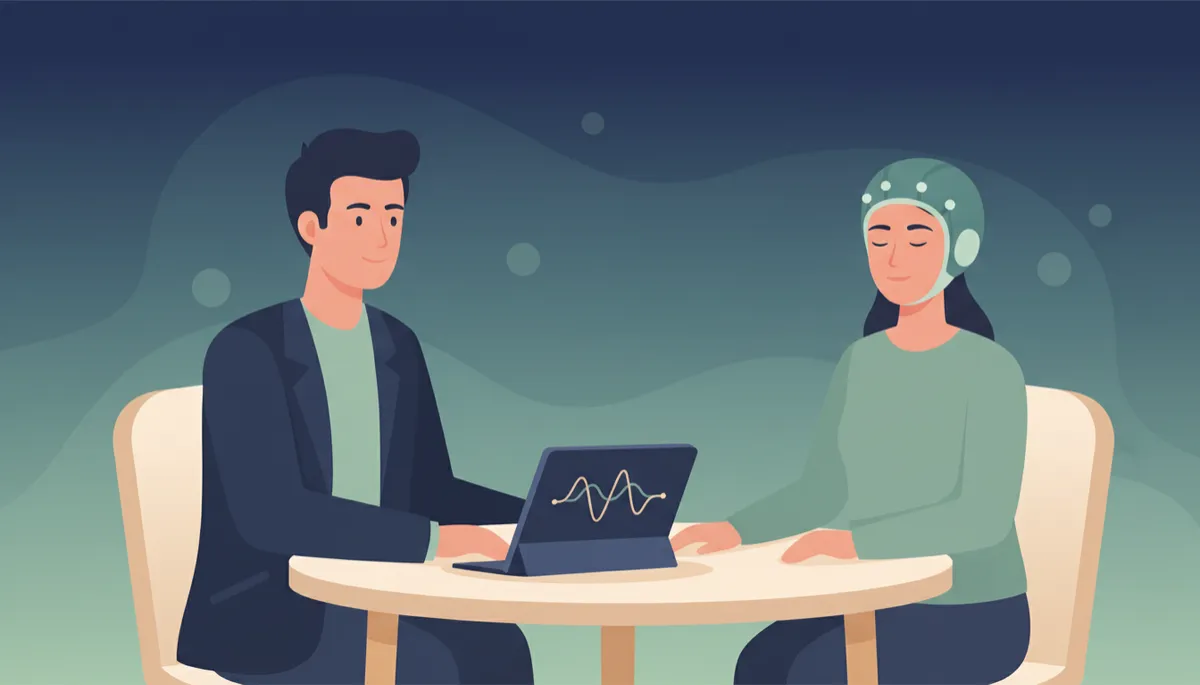
Premium editorial-style of a clinician and client seated across a small table with a tablet...
A calm, step-by-step explanation of brain mapping can ease worries about the equipment.
4. Recording Your Brain Activity
Once everything is in place, the recording phase begins. You are usually asked to sit comfortably in a chair. Depending on the protocol, you might be asked to:
Rest quietly with your eyes closed for a period of time.
Sit with your eyes open and look at a fixed point or simple visual.
Follow other gentle instructions depending on the specific assessment.
During this time, the sensors are simply detecting and recording electrical signals that your brain is already producing. You stay awake, and you can usually adjust your posture a little if you become uncomfortable, as long as you let the clinician know so the recording remains usable.
5. Removing the Equipment
When the recording is complete, the cap or electrodes are gently removed. If gel or other products were used, your hair may feel a little sticky or look “flattened” until you wash it. Your provider will let you know whether they recommend washing your hair later that day and if any other post-assessment steps are helpful.
Does Brain Mapping Use Electricity or Stimulate My Brain?
A common concern is whether qEEG equipment sends electricity into the brain. In a standard EEG or qEEG assessment, the sensors act like microphones, not speakers. They pick up tiny electrical signals generated by your brain; they do not deliver electrical currents into your head as part of the recording process.
This is different from other technologies that may use magnetic fields or electrical stimulation for treatment or research. If you ever feel uncertain about what a clinic offers, you can ask directly: “Is this an EEG/qEEG recording only, or does it involve brain stimulation?” A transparent provider should be happy to explain the difference and outline exactly what their equipment does and does not do.
How Long Does a Brain Mapping Assessment Take?
There is no single standard duration for a qEEG brain mapping appointment. The time involved depends on several factors, including:
The type of equipment and cap used.
How many recording conditions are included (for example, eyes open, eyes closed, or other tasks).
Whether brain mapping is part of a broader assessment on the same day.
Because of this, it would not be accurate to give a fixed timeframe. If you need to plan around work, school, or travel, the most reliable approach is to ask the clinic directly how long you should allow for the appointment, including preparation and any discussion time.
How Should You Prepare for a Brain Mapping Assessment?
Preparation is usually simple, but following your clinic’s instructions helps the process go smoothly and supports good-quality recordings. If you are considering a brain mapping assessment on the Gold Coast, it is worth asking the clinic about the points below in advance so you can arrive feeling organised and calm.
Hair care: Ask whether your hair should be clean and free of styling products such as hairspray, gels, or heavy conditioners on the day of the assessment. These products can sometimes interfere with sensor contact.
Skin and scalp sensitivities: Let the clinic know if you have eczema, psoriasis, contact allergies, or a history of reacting to adhesives or gels. They can discuss suitable options and what to look out for after the appointment.
Comfortable clothing: Choose clothing that allows you to sit comfortably for a period of time. Some people prefer layers so they can adjust if the room feels warm or cool.
Questions and goals: It can be helpful to write down any questions you have about the process or what you hope to learn. Bringing these with you means you do not have to remember everything on the spot.
💡 Pro Tip: If you feel anxious about medical or technical settings, consider telling the clinic when you book. They can often allow a little extra time to explain each step and help you feel settled.
What Happens After a qEEG Brain Mapping Assessment?
After the sensors are removed and you are comfortable, the real work with the data begins behind the scenes. The recorded EEG is typically cleaned to remove artefacts such as eye blinks or muscle movements, and then analysed using qEEG methods to explore patterns of electrical activity across different brain regions and frequencies.
These patterns are then considered in the context of your history, experiences, and goals. A responsible clinician will explain both:
What the findings may suggest about aspects of brain activity or regulation, and
What the findings cannot tell you, including that qEEG on its own does not diagnose ADHD, anxiety, depression, trauma, autism, or other conditions.
You may be offered a follow-up appointment to go through the results, ask questions, and discuss possible next steps. These might include lifestyle strategies, further assessment with other health professionals, or consideration of therapies that are appropriate for your situation. No ethical provider can or should promise specific outcomes or guaranteed results based solely on qEEG findings.
The Brain & Nervous System Assessment at Neurotherapy Australia
At Neurotherapy Australia in Ashmore, Gold Coast, the Brain & Nervous System Assessment is designed as a personalised, multi-layered look at aspects of your brain and nervous system function. Rather than focusing on a single test, the assessment may bring together several types of information, depending on your individual needs and goals.
qEEG brain mapping: Recording and analysing patterns of electrical activity from the scalp to explore aspects of brain functioning under different conditions, such as eyes open and eyes closed.
Heart rate variability (HRV): Measuring variation in the time between heartbeats, which can be influenced by factors such as breathing, sleep, stress, and recovery. HRV can offer insight into how your nervous system responds and adapts over time.
Relevant questionnaires: Exploring your experiences, concerns, and day-to-day functioning to provide context for the objective measures collected during the assessment.
Personalised discussion of findings: Reviewing patterns together, answering your questions, and considering appropriate next steps in line with your values and goals.
The Brain & Nervous System Assessment is not a replacement for a medical or psychological diagnosis. Instead, it aims to offer a clearer picture of certain aspects of your brain and nervous system activity, so you can make more informed choices about your health journey.
📌 Key Takeaway: At Neurotherapy Australia, qEEG brain mapping may be one part of a broader, personalised Brain & Nervous System Assessment, rather than a stand-alone test.
Common Concerns About qEEG Brain Mapping, Answered
If you feel nervous about the idea of brain mapping, you are in very good company. Here are some of the most common concerns people share, along with how they are usually addressed in practice.
“I am worried about feeling trapped under the equipment.” Sensor caps are designed to be snug but not restrictive. You remain seated in a regular chair, and your face is uncovered. If you feel claustrophobic or anxious, you can tell the clinician at any time so they can pause or adjust where possible.
“I am sensitive to touch on my scalp.” Let the clinic know in advance so they can take extra care when preparing your scalp and placing the sensors. They may also discuss whether short breaks are possible during the process, depending on the protocol.
“I am scared of what the results might say.” Remember that qEEG is not a pass-or-fail test. It does not label you or define your worth. Instead, it offers information about patterns of brain activity that may help guide further conversations and decisions. You always have the right to ask questions and to take time before deciding on any next steps.
Frequently Asked Questions About Brain Mapping
Is brain mapping invasive?
Standard qEEG brain mapping is non-invasive. Sensors are placed on your scalp to record electrical activity. There are no needles, no surgery, and no cutting of the skin involved in a standard recording procedure.
Does brain mapping hurt?
Most people find that brain mapping is not painful. You may feel mild pressure from the sensor cap, cool gel on your scalp, or some discomfort from sitting still for a period of time. These sensations are usually manageable and can often be eased by adjusting the equipment or taking short breaks where the protocol allows. If anything feels too uncomfortable, you should let your clinician know straight away.
Does qEEG brain mapping use electricity or shocks?
No. In standard EEG and qEEG recording, the sensors detect electrical activity that your brain already produces. They do not send electricity into your brain and do not deliver shocks as part of the mapping process.
Can brain mapping diagnose ADHD, anxiety, or other conditions?
No. qEEG brain mapping is not a standalone diagnostic test for ADHD, anxiety, depression, trauma, autism, or other conditions. It may highlight patterns that some research has associated with certain presentations, but any diagnosis should come from a qualified medical or mental health professional who considers a full clinical picture, not from qEEG alone.
Do I need to prepare before my appointment?
Preparation depends on the clinic’s equipment and protocols. It is sensible to ask about hair washing, styling products, and any other specific instructions. You may also wish to mention any skin sensitivities, sensory concerns, or anxiety about procedures so the team can support you appropriately. Following the clinic’s guidance helps you get the most from your appointment.
Take the Next Step With Confidence
It is completely understandable to feel cautious before trying something new, especially when it involves your brain. The key points to remember are that qEEG brain mapping is generally non-invasive and painless, it records electrical activity rather than sending electricity into your brain, and any minor discomfort is usually related to the cap, sensors, or scalp preparation rather than pain or harm.
If you are curious about how your brain and nervous system are functioning and you are seeking brain health support on the Gold Coast, the team at Neurotherapy Australia can talk you through what to expect from their Brain & Nervous System Assessment, including whether qEEG brain mapping may be appropriate for your situation.
You are warmly invited to reach out, ask questions, and explore your options without pressure. An informed conversation is often the best first step toward feeling more at ease and more in control of your next move.
Contact Neurotherapy Australia
38/207 Currumburra Road
Ashmore QLD 4214, Gold Coast, Australia
This article is for general educational purposes and does not replace personalised medical, psychological, or allied health advice. If you have concerns about your health, please speak with a qualified health professional.
Ever wonder what's going on inside your brain? Book a Brain and Nervous System Assessment today! Click here to find out more →

