Understanding qEEG Brain Mapping Benefits
Brain Health, qEEG Brain Mapping, Neurotherapy Australia
What Can a Brain Map Show? Understanding qEEG Brain Mapping
Curious about what a brain map can actually show you? If you have been hearing about qEEG brain mapping, stress, focus, or “optimising your brain” on the Gold Coast, it is natural to want clear, calm information you can trust. This article explains what qEEG brain mapping measures, what it may help you explore, and what it cannot tell you on its own—so you can decide whether a Brain & Nervous System Assessment at Neurotherapy Australia may be right for you.
Quick Answer: What Can a Brain Map Show?
In simple terms, a qEEG brain map may show how patterns of electrical activity looked across your scalp during a specific recording. It can highlight:
How different frequency ranges (often called brainwaves) appeared during the session
How these patterns varied across different scalp locations
How your recorded activity compared with an appropriate reference database, where used
A brain map does not read your thoughts, reveal your personality, or diagnose a condition on its own. Instead, it may contribute helpful information to a broader conversation about your brain health and wellbeing.
What Is Brain Mapping, EEG, and qEEG?
When we talk about brain mapping in this context, we are usually referring to quantitative electroencephalography (qEEG). To understand qEEG, it helps to start with EEG itself.
What Is EEG?
An electroencephalogram (EEG) is a non-invasive test that uses small sensors on the scalp to record tiny electrical signals produced by brain activity. These sensors do not put electricity into your brain; they simply detect activity that is already there. The signals are recorded as wavy lines over time.
What Is qEEG Brain Mapping?
qEEG stands for quantitative EEG. It uses computer-based methods to analyse the EEG recording in more detail. The analysis may:
Separate the signal into different frequency ranges (often called delta, theta, alpha, beta, and gamma)
Summarise how strong or variable these frequencies were at each scalp location
Compare selected measures with a reference database, where appropriate
The results may be displayed as colour-coded maps or other visual summaries. These images represent measured or calculated data; they are not photographs of the brain and do not show thoughts or emotions directly.
What Types of Information Can qEEG Brain Mapping Provide?
1. Brain Activity Patterns Across Frequency Ranges
EEG signals contain a mix of slower and faster activity. In research and clinical practice, these are often grouped into frequency ranges such as:
Frequency range | Typical context (simplified) |
|---|---|
Delta & theta | Common in sleep, drowsiness, and some resting states |
Alpha | Often seen with relaxed wakefulness, especially with eyes closed |
Beta & gamma | May be linked with alertness, thinking, or sensory processing |
A qEEG report may summarise how these ranges appeared during the recording. Importantly, the meaning of any pattern depends on the recording conditions, brain region, and broader context. A single pattern does not prove a particular diagnosis or explain every symptom.
2. Differences Across Scalp Locations
Sensors are placed at multiple points on the scalp. qEEG can show how selected measures vary from one region to another. For example, it may highlight where certain frequencies appeared relatively stronger or weaker during the recording.
These scalp patterns do not isolate a single brain structure; each sensor can pick up activity from several underlying sources. Interpretation therefore needs care and should be carried out by appropriately trained professionals using suitable methods.
3. Patterns Under Specific Conditions
Brain activity can look different depending on what you are doing. A qEEG session may include resting with eyes closed, resting with eyes open, or following simple instructions. The brain map reflects those specific conditions, not every possible state you experience in daily life.
📌 Key Takeaway: A brain map is a snapshot of electrical activity under particular conditions. It may offer useful insights, but it is not a complete picture of how your brain works in every moment.
Why Brain Activity Varies From Moment to Moment
Your brain is dynamic. Even in the same person, EEG patterns can change over time. Several factors may influence what appears in a qEEG recording:
Alertness and sleepiness: Being tired, drowsy, or drifting towards sleep can shift activity towards slower frequencies, while being more alert may change the pattern in other ways.
Movement and muscle activity: Blinking, jaw tension, frowning, or small body movements can introduce extra signals that sit on top of the underlying brain activity.
Recording conditions: How well the sensors contact the scalp, the environment, and the procedure itself can affect data quality.
Individual differences: Age and other relevant factors can influence how activity typically looks, and how results should be interpreted for you.
Analysis methods: Different processing steps and reference standards may produce different-looking summaries from the same underlying data.
These influences are one reason why qEEG findings need context and should not be treated as a simple “pass or fail” result about your brain health.
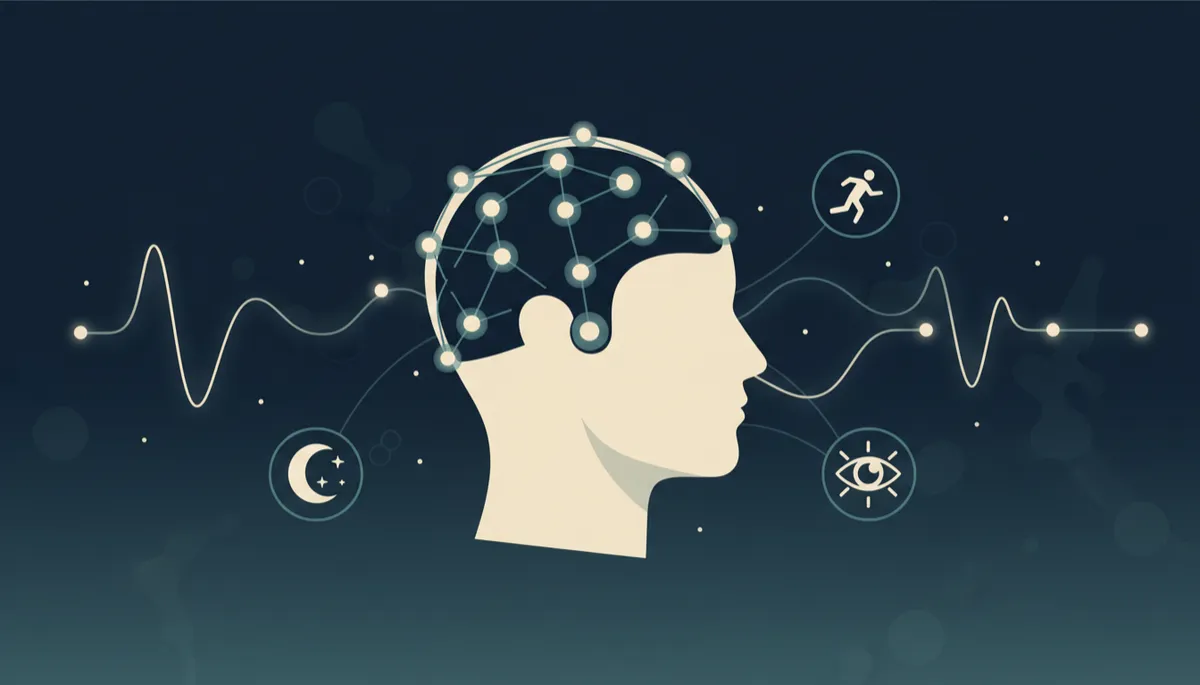
Brain activity patterns shift naturally with alertness, movement, and recording conditions.
How qEEG Findings May Support Brain Health and Wellbeing
For many people on the Gold Coast who are curious about brain health, stress, or focus, qEEG brain mapping can feel reassuring because it offers something concrete to look at. When interpreted carefully, qEEG findings may:
Support conversations about sleep, alertness, or how easily your mind drifts or switches tasks
Help guide questions about whether further assessment or support might be helpful, where appropriate
Contribute to a broader understanding of how your brain responded under the recording conditions
qEEG is just one piece of the puzzle. At Neurotherapy Australia, findings are considered alongside your story, relevant history, questionnaires, and other information, rather than being used in isolation.
💡 Gentle reminder: Your experiences and goals remain at the centre of the conversation. The data support that story; they do not replace it.
What Brain Mapping Cannot Tell You
It is important to be clear about the limits of qEEG brain mapping. A brain map cannot:
Read your thoughts, memories, or intentions
Measure your intelligence, personality, or worth as a person
Independently diagnose ADHD, anxiety, depression, trauma, autism, or any other medical or mental health condition
Prove the exact cause of your symptoms or difficulties
Certain patterns may be discussed in research in relation to particular conditions, but in real-life practice, many people share overlapping patterns for many different reasons. This is why responsible clinicians use cautious language such as “may provide information” and “needs to be interpreted in context.”
⚠️ Important: Be wary of any claim that a single brain map can “prove” you have (or do not have) a condition. Proper diagnosis, where appropriate, requires a comprehensive clinical assessment.
What to Expect During a qEEG Brain Mapping Session
Many people feel more at ease once they know exactly what will happen. A typical qEEG recording at a premium clinic like Neurotherapy Australia may look like this:
Preparation: You sit comfortably in a chair. Your scalp is measured so the sensors can be placed in standard positions. A cap or individual electrodes are fitted, often with a small amount of gel or saline solution to improve contact.
Recording: You are asked to relax, keep as still as possible, and follow simple instructions (for example, resting with eyes closed, then open). The equipment records the electrical activity from your scalp. The procedure is non-invasive and does not send electricity into your brain.
After the session: The data are processed and analysed. This may include checking for artefacts (such as eye blinks or movement), reviewing patterns across frequency ranges, and preparing visual summaries or reports.
Appointment length and specific steps can vary depending on the assessment protocol and your individual needs. Your clinician can explain what to expect in your particular case and answer any questions you have.
Neurotherapy Australia’s Brain & Nervous System Assessment
At Neurotherapy Australia in Ashmore on the Gold Coast, the Brain & Nervous System Assessment is designed to bring together several sources of information in a calm, supportive way. Depending on your goals and needs, it may include:
qEEG brain mapping: To record and analyse patterns of electrical activity from the scalp under specific conditions.
Heart rate variability (HRV) measurement: To explore variation in the time between heartbeats, which can be influenced by breathing, physical activity, sleep, stress, and recovery.
Relevant wellbeing questionnaires: To better understand your experiences, concerns, and what matters most to you right now.
Personalised discussion: To walk through the information collected, explain what it may suggest, and consider appropriate next steps or referrals, where needed.
The assessment does not replace medical or psychological care and does not by itself diagnose conditions such as ADHD, anxiety, depression, trauma, or autism. Instead, it may provide a structured, gentle starting point for understanding aspects of your brain and nervous system in the context of your life.
Frequently Asked Questions About Brain Mapping
Is brain mapping safe?
Standard EEG and qEEG recordings are considered non-invasive. Sensors sit on the scalp and detect electrical activity; they do not send electricity into the brain. If you have particular health concerns, it is always best to discuss them with the clinician before your appointment.
Does a brain map show my thoughts or secrets?
No. qEEG brain mapping does not reveal what you are thinking, your memories, or private information. It summarises patterns in electrical activity recorded from the scalp under specific conditions.
Can a brain map tell me if my brain is “healthy”?
A qEEG recording provides information about certain aspects of electrical activity. It is not a complete measure of brain health. Results need to be interpreted in light of your age, history, symptoms, and other relevant findings. If there are concerns, your clinician may recommend further assessment or referral to an appropriate health professional.
Is brain mapping right for everyone?
Not necessarily. For some people, other forms of assessment or support may be more suitable. At Neurotherapy Australia, the team can help you consider whether a Brain & Nervous System Assessment, which may include qEEG, is appropriate for your situation, or whether another path may better match your needs.
Bringing It Together: A Calm, Informed Next Step
If you have been wondering “what can a brain map show?”, the key message is this: qEEG brain mapping may offer a structured snapshot of your brain’s electrical activity under specific conditions. It can help open thoughtful conversations about stress, focus, sleep, and overall brain-related wellbeing, especially when combined with other information.
It does not diagnose conditions on its own, read your thoughts, or provide guaranteed answers. Instead, it can be one useful tool in a careful, person-centred approach to brain health on the Gold Coast.
Next gentle step: If you would like to explore whether a Brain & Nervous System Assessment at Neurotherapy Australia may be suitable for you, you are welcome to contact the clinic to ask questions or enquire about availability. There is no obligation—just a chance to learn more about your options.
Ever wonder what's going on inside your brain? Book a Brain and Nervous System Assessment today! Click here to find out more →

